
THE LEGENDARY SUITES
The Muraka
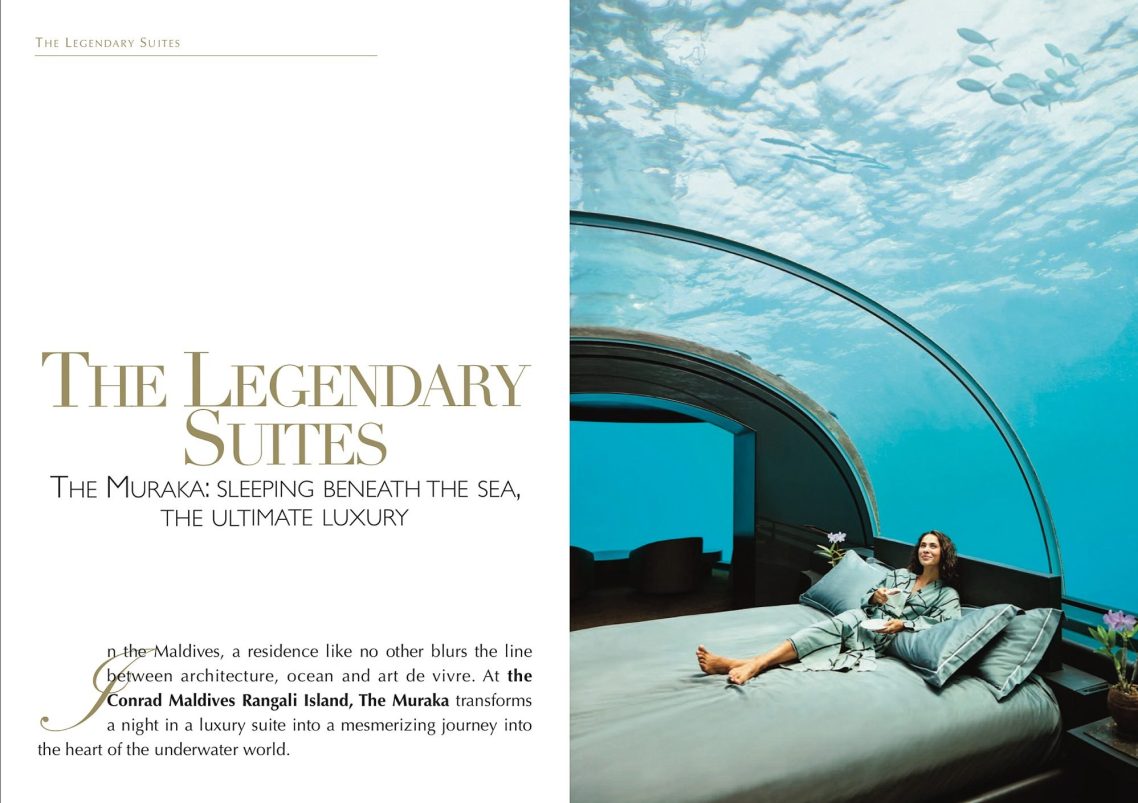
In the Maldives, a residence like no other blurs the line between architecture, ocean and art de vivre. At the Conrad Maldives Rangali Island, The Muraka transforms a night in a luxury suite into a mesmerizing journey into the heart of the underwater world. A Destination That Defies the Codes of Luxury In the world of ultra-exclusive hospitality, some addresses do more than promise an escape: they reinvent the very way a journey is lived. Set on the translucent waters of the Indian Ocean, within the Conrad Maldives Rangali Island, The Muraka belongs to that rare category. Its name, which means "coral" in Dhivehi, the language of the Maldives, sums up its ambition: to make the ocean far more than a backdrop, a true living space. Billed as the first luxury hotel residence of its kind, this architectural creation spans two levels, between sky and sea.
With some 550 sq m (roughly 5,900 sq ft), it combines privacy, generous volumes and bespoke services, in an environment where the horizon seems to know no limits. A Bedroom in the Heart of the Marine World The true singularity of The Muraka reveals itself beneath the surface. At a depth of about five metres, the master bedroom lies under a spectacular curved acrylic dome, offering a 180-degree panoramic view of marine life. From the bed, guests watch fish drift through the turquoise waters, while the shifting light draws a silent, ever-renewed spectacle. Here, there is no need for mask or tank to explore the ocean floor. The reef becomes the everyday landscape, within reach from the comfort of a bedroom perfectly integrated into its aquatic surroundings. An almost unreal experience, where luxury is measured less by the accumulation of objects than by the rarity of the moment. A spiral staircase or a private lift leads down to this underwater world. The bathroom and the observation areas extend the immersion, while a dedicated tunnel offers yet another perspective on this natural aquarium. The architecture makes no attempt to compete with the beauty of the seabed: it fades into the background to better reveal it.
Above the Waves, the Art of Hospitality On the surface, refinement takes a more classic form, yielding nothing to the exceptional. The reception areas bring together a living room, dining room, fully equipped kitchen and private bar. Two additional bedrooms with en-suite bathrooms allow the residence to welcome family or guests, bringing its capacity to several travellers in absolute comfort. Outside, the terraces open onto the ocean and feature an infinity pool, lounging areas and spaces designed to enjoy the Maldivian sun. A butler available 24 hours a day orchestrates the stay with the utmost discretion: private dining, bespoke experiences and the organisation of excursions all become possibilities designed around the wishes of guests. This residence is thus aimed at a clientele seeking more than a spectacular villa: a private space where every detail contributes to a singular experience, far from the rhythms and the gaze of the outside world. Exclusivity as an Experience At the Conrad Maldives Rangali Island, the experience can be extended with discoveries at sea, spa treatments or dinner at the renowned Ithaa Undersea Restaurant, another feat of the resort, set beneath a transparent dome submerged in the ocean.
The Muraka embodies a new definition of the exceptional journey. Technological sophistication serves a deeply elemental emotion here: watching the sea, listening to the silence and feeling, for a moment, a stranger to the world above. In a market where palaces compete with panoramic suites and private villas, The Muraka keeps a head start on a singular terrain: that of wonder.
For spending a night beneath the ocean, surrounded by marine life, is no longer the stuff of dreams or science fiction. It is an experience that only a privileged few can afford, and whose memory, for its part, knows no boundaries.
ARCHITECT OF GENIUS
Villa d'Este, Pirro Ligorio
and the Symphony of Water
There are some revenges that flow naturally. That of Ippolito II d'Este, Cardinal of Ferrara, son of Lucrezia Borgia, is one, quite literally. Five times a candidate for the throne of Saint Peter, five times passed over, the man could have sunk into the muted bitterness of disappointed courtiers. He chose another path: since Rome was denied him, he would bring the waters of the Aniene into his own garden, and make them sing, dance, roar, until the whole world came to admire them.
Five centuries later, the world still comes. Appointed Governor of Tivoli in 1550 by Pope Julius III, less out of favor than as a consolation prize, the cardinal found a grim official residence: the gray walls of a former Benedictine convent. For a man raised at the court of Francis I, as much an aesthete as a diplomat, the insult was almost crueler than his defeat at the conclave. He then resolved to build what Rome, the real Rome, the Rome of the popes, had never offered him: a kingdom of his own making. A Neapolitan to Tame a Hill The project was entrusted to Pirro Ligorio, a Neapolitan architect and antiquarian, an erudite mind who had spent years excavating the nearby ruins of the Villa Hadriana, Emperor Hadrian's summer residence.
Ligorio did not invent the Villa d'Este out of nothing: he built it against an ancient model he knew by heart, with the barely concealed ambition of surpassing it. Marbles and statues were salvaged from the ruins of the imperial villa, and made to live again, fifteen centuries later, in a cardinal's garden. Work began in 1560, but the affair was anything but smooth sailing. Ippolito was pulled away by diplomatic missions, sent to resolve a war in Parma, then to Tuscany on behalf of Henry II. In 1555, he was even accused of simony by Pope Paul IV and exiled. The construction site waited. The hill, for its part, bided its time. To feed the gardens, Ligorio had a nearly six-hundred-meter underground gallery dug beneath the town of Tivoli, capturing the water of the Aniene River. No pumps, no mechanisms: all the pressure came from gravity alone.
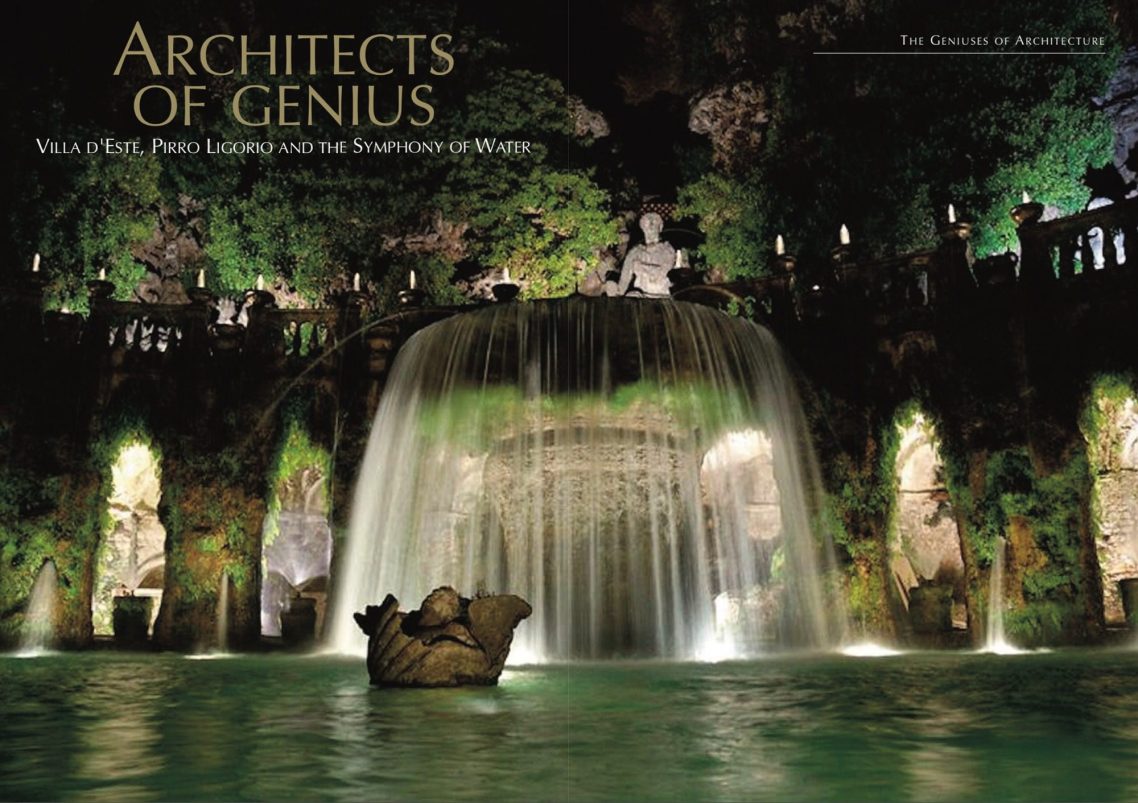
A hydraulic feat that still works today, four and a half centuries later, with the quiet stubbornness of things well made. The Impossible Wager Transforming an arid hillside into a terraced garden was, in the sixteenth century, as much a technical as an aesthetic challenge. Ligorio set to it with the help of hydraulic engineer Tommaso Chiruchi, already known for the fountains of the Villa Lante. Together, they devised a system in which water, the sole heroine of the place, orchestrated everything: it sprang up, fell back, spread into silent sheets or burst into sounding jets, following a carefully staged dramaturgy.
The result owes more to opera than to gardening. More than five hundred fountains punctuate the grounds, including the Avenue of a Hundred Fountains, an unbroken ribbon of water lined with masks and obelisks, and the Fountain of the Organ, capable, thanks to a compressed-air system driven by the falling water itself, of playing music. A feat so spectacular that, a century later, European travelers still cited it as a marvel of engineering, long before anyone had thought to patent the idea of a garden
that makes music.
The Detail That Changes Everything There is, in the story of the Villa d'Este, an irony that even the most stoic of Britons would appreciate: the cardinal died in 1572, barely months after the completion of his great work, without having had time to enjoy it for long. He never became pope. He did, however, create one of the most copied gardens in Western history, from Versailles to the English gardens of the eighteenth century, the shadow of Tivoli looms over the entire history of the European garden. A curious consolation: what the Church denied him, art gave back, with interest.
The villa's fortunes then varied. It fell into decline during the eighteenth and nineteenth centuries, once no one still thought to maintain fountains for a cardinal two hundred years dead, before an unexpected revival came under Cardinal Gustav von Hohenlohe, who hosted at the villa in the nineteenth century figures such as the composer Franz Liszt, who is said to have composed, inspired by the murmur of the fountains, certain pages of his "Années de pèlerinage" there.
The Italian state took charge of its restoration starting in 1920. In 2001, UNESCO inscribed the whole as a World Heritage Site, confirming what Ligorio had sensed from the very first pickaxe blow: that water, well mastered, is a universal language. UNESCO describes it as one of the most accomplished expressions of Renaissance culture in its most refined form, a rare judgment, given how sparing the organization usually is with superlatives. The Villa d'Este is not located in Rome but in Tivoli, some thirty kilometers east of the capital, a detail the cardinal, obsessed as he was with proximity to Roman power, would probably not have appreciated seeing underlined.
Luxury Seen Differently What strikes you today, walking these terraces, is not the ostentation, real as it is; a sixteenth-century cardinal did not build five hundred fountains out of modesty,but the precision of the gesture. Every cascade answers to a calculation, every vista to an intention. Luxury, here, is not accumulation; it is the absolute mastery of an element as elusive as water, bent to the will of a man and the talent of an architect. A lesson that has not aged a day: excellence is never measured in quantity, but in exactness.
One question remains, almost impertinent, as you leave the gardens: how many projects today would still dare to stake twenty years of work on a single idea, making water sing on a hillside, without ever knowing at the outset whether the technique would rise to the ambition?
At Tivoli, it did. And it still flows, every day.
KELLY WEARSTLER
The Icon of Sculptural Luxury
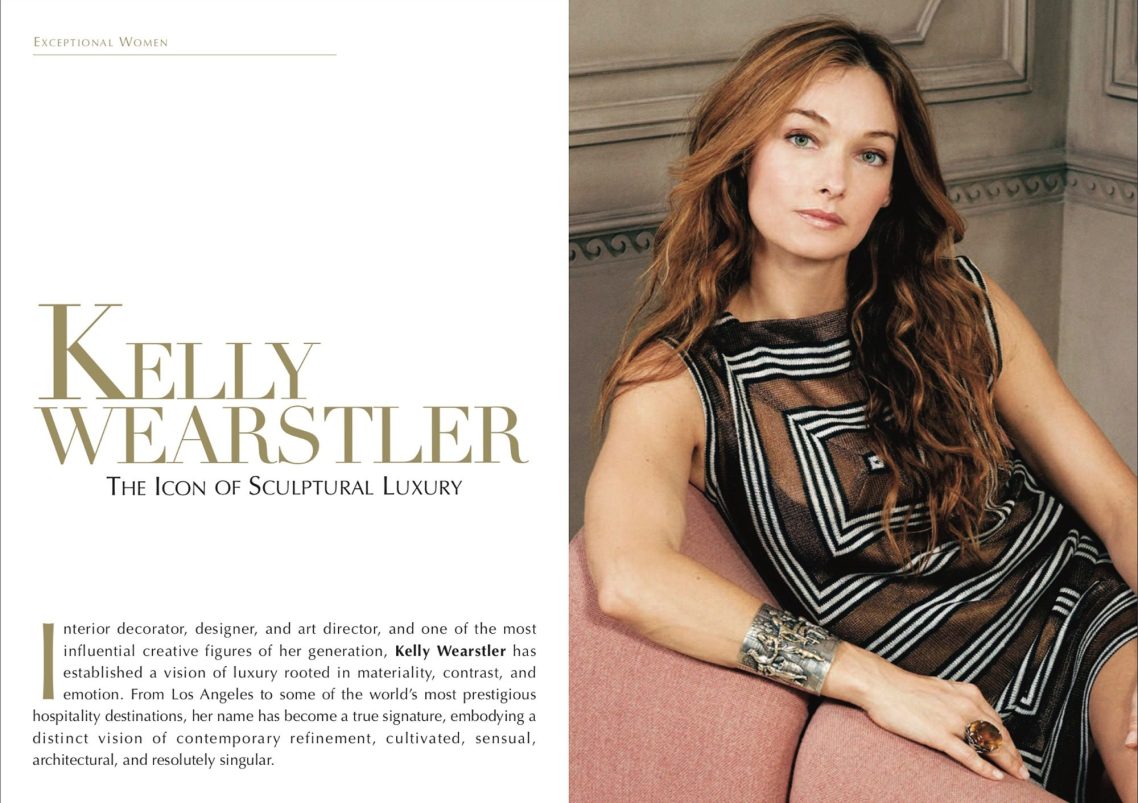
Interior decorator, designer, and art director, and one of the most influential creative figures of her generation, Kelly Wearstler has established a vision of luxury rooted in materiality, contrast, and emotion. From Los Angeles to some of the world’s most prestigious hospitality destinations, her name has become a true signature, embodying a distinct vision of contemporary refinement, cultivated, sensual, architectural, and resolutely singular. A Destiny Shaped by Style Born in South Carolina and educated in Boston at the Massachusetts College of Art and Design, Kelly Wearstler belongs to that rare breed of creators whose paths seem, from the very beginning, guided by an almost instinctive sense of beauty.
Her eye was sharpened early on through her mother, who herself had close ties to the worlds of design and antiques—an influence that helps explain the prominent role that collectible pieces, antique objects, and historical references would play throughout her career. After spending time between New York and Los Angeles, she established her studio permanently in the City of Angels in 1995. Her practice began with an almost artisanal spirit, yet quickly distinguished itself through a personal, layered, and expressive vision—one that stood in stark contrast to the consensual neutrality then prevailing in high-end interior design. Within just a few years, she evolved from a promising decorator into a leading figure in American design, overseeing projects of every scale, from private residences and luxury hotels to commercial and institutional spaces. Her rise was no accident, but rather the result of a keen sense of staging and a remarkable entrepreneurial drive.
For Kelly Wearstler, space becomes narrative, material becomes language, and detail, far from being merely decorative, emerges as the central element of the composition. This philosophy has enabled her to move effortlessly from residential interiors to hospitality, and from décor to fully immersive experiences, with the ease that distinguishes truly great names from merely talented ones. The Wearstler Language: An Aesthetic of Contrast What first defines Kelly Wearstler is an aesthetic language that is instantly recognizable. Her style is built upon the fertile tension between eras, textures, and design codes. She herself describes her approach as a form of “mixology”: a juxtaposition of contemporary and classical, masculine and feminine, raw and refined. Contemporary elements converse with Art Deco influences, while architectural rigor meets a carefully orchestrated sense of exuberance. Nothing feels flat, nothing appears incidental, and nothing is ever overly restrained.
This aesthetic of tension gives rise to interiors with an immediate magnetism. Veined stones, dark woods, expressive marbles, aged leathers, polished metals, sumptuous textiles, and sculptural furnishings come together to create atmospheres that are almost cinematic, existing as much within the realm of emotional architecture as that of decoration. Far removed from the sleek minimalism that long dominated the luxury segment, Kelly Wearstler champions a vision of refinement that is more narrative, more tactile, and deeply personal. She does not seek neutrality, but intensity. What sets her apart from many designers of her generation is precisely this ability to make luxury a sensation before turning it into a statement. Kelly Wearstler does more than dress a space—she endows it with a soul, a depth, and a language of its own.
This is what gives her projects that singular quality: the feeling of stepping into a world apart—and never emerging from it entirely unchanged. Projects That Made History The Avalon Hotel Beverly Hills: a founding project. Her first major hospitality project, the Avalon Hotel Beverly Hills, remains one of the cornerstones of her reputation. Now an iconic address, it served as a launchpad for a career that would quickly extend far beyond the boundaries of traditional interior design. The enduring strength of her creative imprint is underscored by the fact that the hotel’s later renovation was carried out under her own supervision.
The Proper Hotels: the art of immersion. In a similar vein, her work for Proper Hospitality, including projects in Santa Monica, Austin, and San Francisco—confirmed her ability to design spaces where guests do not merely stay, but experience a fully immersive, almost theatrical journey. In these hotels, everything contributes to a broader narrative: proportions, materials, colors, light, and furniture. The result goes beyond comfort to achieve a sophisticated form of immersion that redefines the standards of contemporary hospitality luxury. Her spaces are elegant, but they also carry personality, depth, and an almost tactile memory.
This ability to embed a strong vision within complex programs makes her far more than an interior designer: she is, in essence, an architect of atmosphere. Other Iconic Achievements Beyond hospitality, her most widely discussed projects include major commercial and institutional spaces such as the BG Restaurant at Bergdorf Goodman in New York, Westfield Century City in Los Angeles, and the Viceroy Hotels and Residences. These projects demonstrate her ability to adapt her visual language to a wide range of functions without ever losing her singularity. In her reference works, such as Synchronicity, one can also find the full versatility of her repertoire: collectors’ homes, beach houses, and private residences infused with Mediterranean, Moroccan, Japandi, or Californian influences depending on the context.
This diversity is one of the keys to her lasting presence on the international stage: Wearstler never repeats a setting—she refines an attitude. From Furniture to Lifestyle: an Expanding Universe One of Kelly Wearstler’s major achievements lies in her ability to extend her universe beyond the spaces she designs. Her name has progressively established itself in furniture, objects, home accessories, and tableware, territories she approaches with the same principle of absolute coherence, where each object becomes a natural extension of her creative language. Her collaborations with prestigious maisons reflect this desire to embed her aesthetic into everyday objects elevated by design. Her first collaboration with the Italian house Giobagnara, through the Maris collection centered on the art of entertaining and bar accessories, perfectly illustrates this principle.
With Serax, she has developed tableware collections inspired by organic forms and antique references. Her projects with Christofle, along with a jewelry collaboration with Editorialist translating her taste for maximalist Art Deco into fine jewelry pieces, extend the same vision of luxury: tactile, graphic, and highly desirable. More recently, her furniture collection with H&M Home, announced in 2026 as the Swedish brand’s first-ever furniture collaboration—has confirmed the scale of her influence, capable of bridging the world of heritage luxury with more accessible collections, without compromising on style. These limited-edition projects allow Wearstler to diffuse her visual language to a broader audience while maintaining a distinctly premium positioning. Each collaboration extends her universe rather than diluting it.
An Influence Beyond Design Over the years, Kelly Wearstler has accumulated numerous distinctions and forms of recognition: repeated appearances in industry benchmark lists such as AD100, the Elle Decor A-List, Wallpaper’s Top 20 Designers, and Time’s Design 100. She is also one of the first interior designers to have launched a MasterClass, marking her evolution into a pedagogical figure as much as a creative one. Together, these markers confirm a rare status: that of a designer who has become a cultural brand, capable of influencing not only interior design trends but also the way luxury itself is narrated. Her influence extends beyond aesthetics alone. By helping rehabilitate the notion of opulence in a contemporary language—stripped of any academic rigidity—she has contributed to redefining what it means to design a major interior.
Where others aim for purity, she introduces complexity; where others standardize, she individualizes. Her work is not limited to producing beautiful spaces or objects: it proposes a worldview, a way of inhabiting the present with intensity. In a landscape often saturated with polished imagery and predictable codes, she defends an idea of design as narrative power, as cultivated seduction, as a space for total expression. It is precisely this tension between boldness, visual culture, and instinct that has established Kelly Wearstler among the great stylists of her time, and that allows her to inspire a new generation of designers, interior architects, and brands seeking to break away from overly smooth conventions.
Kelly Wearstler and the Luxury of Tomorrow Kelly Wearstler embodies an intellectual as well as aesthetic form of luxury: a luxury that is not limited to the rarity of objects, but rooted in the quality of perception, the depth of references, and the mastery of staging. Her work resonates particularly with worlds of exceptional travel, signature hospitality, lifestyle, and heritage brands seeking to modernize their image without losing their aura. Her universe speaks to those who seek not only beauty, but the remarkable; not only comfort, but presence, depth, and memory.
At a time when luxury is being redefined by the singularity of experiences and the strength of creative direction—by the rarity of vision as much as by the value of objects—Kelly Wearstler remains one of its most compelling interpreters. She understood, before many others, that a great interior is not merely meant to be inhabited: it must leave a mark, move, and endure.
And that refinement, when fully embraced, is anything but silent—it vibrates, breathes, asserts itself. It is precisely this ambition, sustained consistently over three decades, that makes Kelly Wearstler an icon of international design and a defining signature of the present era.
THE PARIS OPERA BALLET
A jewel of art and architecture
A History of Prestige: Founded in 1669 during the reign of Louis XIV, the Paris Opera Ballet is an iconic institution of French art. With over three centuries of existence, it represents a crucible of artistic excellence and tradition. In 1713, Louis XIV established the Paris Opera Ballet School, making the academy one of the oldest and most prestigious in the world. Over the centuries, the Ballet has evolved, incorporating diverse influences while preserving the essence of classical dance.
Stars in the Firmament The Paris Opera Ballet has been the cradle of numerous stars, exceptional dancers who have made their mark on the history of dance. Among them, Rudolf Nureyev, a world-renowned star and the Director of Dance at the Opera from 1983 to 1989, revolutionized the repertoire and technique. Today, names such as Aurélie Dupont, who served as Director of Dance until 2022, and current stars like Hugo Marchand and Léonore Baulac, continue to embody this tradition of excellence. An Exceptional Program The programming of the Paris Opera Ballet lives up to its reputation, offering a harmonious blend of timeless classics and contemporary creations. Iconic works such as "Swan Lake," "Giselle," and "La Bayadère" stand alongside the creations of modern choreographers like Pina Bausch, Mats Ek, and Crystal Pite.
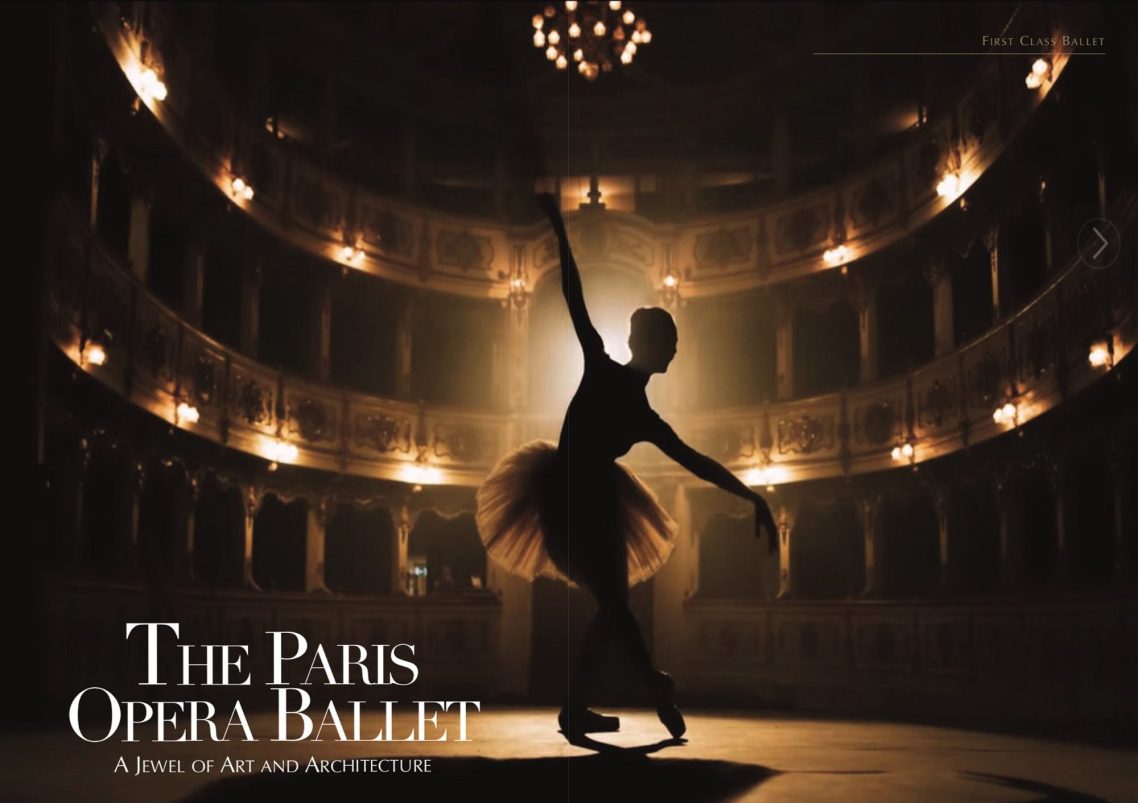
This diversity reflects the Paris Opera's commitment to remaining at the forefront of dance while honoring its heritage. Each season provides an opportunity to discover or rediscover major works, performed by dancers at the pinnacle of their art. The repertoire is meticulously selected to offer audiences moments of grace and emotion, combining technical virtuosity with artistic depth. A Magnificent Architectural Jewel The Palais Garnier, home to the Paris Opera Ballet, is itself a masterpiece. Inaugurated in 1875, this palace of art and culture is the brainchild of architect Charles Garnier. Its eclectic and sumptuous style makes it one of the most beautiful theaters in the world. The Facade and the Grand Staircase The facade of the Palais Garnier, with its Corinthian columns and allegorical statues, pays homage to the grandeur and elegance of French architecture. Inside, the Grand Staircase, with its multicolored marbles and gilded ornaments, is a spectacle in its own right. This majestic staircase has become an iconic symbol, immortalized in numerous works of art.
The Auditorium and the Dance Foyer The auditorium, with its ceiling painted by Marc Chagall and its monumental chandelier, is the perfect setting for the Ballet's performances. Chagall's ceiling, inaugurated in 1964, adds a modern and dreamlike touch to this classical ensemble. The Dance Foyer, on the other hand, is a legendary space where dancers prepare and rehearse. Its walls are adorned with portraits of great dance figures, offering a deep dive into the history of the Ballet. The Paris Opera Ballet, through its history, talents, and exceptional architectural setting, embodies the excellence and radiance of French culture. Each performance is a celebration of beauty and passion, perpetuating a tradition that continues to amaze audiences worldwide.
The harmonious marriage of dance and architecture makes the Paris Opera a unique place where art is expressed in all its splendor. www.operadeparis.fr
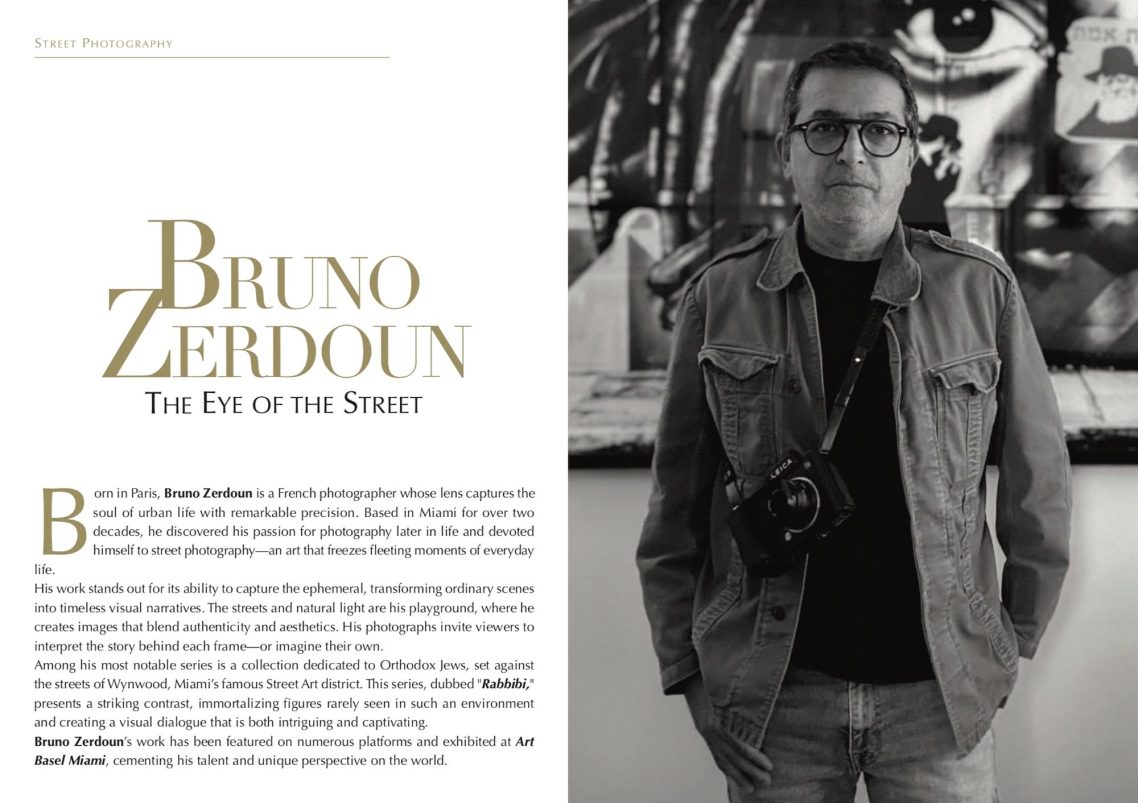
BRUNO ZERDOUN
The eye of the street
Born in Paris, Bruno Zerdoun is a French photographer whose lens captures the soul of urban life with remarkable precision. Based in Miami for over two decades, he discovered his passion for photography later in life and devoted himself to street photography, an art that freezes fleeting moments of everyday life.
His work stands out for its ability to capture the ephemeral, transforming ordinary scenes into timeless visual narratives. The streets and natural light are his playground, where he creates images that blend authenticity and aesthetics. His photographs invite viewers to interpret the story behind each frame, or imagine their own. Among his most notable series is a collection dedicated to Orthodox Jews, set against the streets of Wynwood, Miami’s famous Street Art district. This series, dubbed "Rabbibi," presents a striking contrast, immortalizing figures rarely seen in such an environment and creating a visual dialogue that is both intriguing and captivating.
Bruno Zerdoun’s work has been featured on numerous platforms and exhibited at Art Basel Miami, cementing his talent and unique perspective on the world. First Class: Your work captures fleeting moments of life with strong storytelling. How would you define a "good" street photograph? Bruno Zerdoun : An image that makes you stop and look. It’s the marriage of authenticity and aesthetics. Combine the natural beauty of the scene with the photographer’s eye and technical skill, and you have the key ingredients for a good photograph. Your portraits of Orthodox Jews in the Rabbibi series are particularly striking.
Why did you choose this subject? I was drawn to creating these somewhat unusual images, using the figure of the rabbi, a symbol of religious practice and, in a way, of restriction, in a setting filled with graffiti and street art, which are supposedly incompatible. However, the visual result proves otherwise, and so does the spontaneous participation of real rabbis in this series. Spirituality and Judaism coexist perfectly well with seemingly opposite worlds like rock music, fashion, and art.
Would you say that your photography is primarily aesthetic or conveys a message? Apart from the preconceived notions I wanted to highlight with the Rabbibi series, my photos don’t carry any particular message. That might happen one day. I have nothing against it and generally respect photographers who share ideas through their images, but delivering a message has never been a source of motivation in my work. I’m fortunate to practice this profession as a hobby, and I take advantage of that by avoiding heavy or condescending images.
How important is spontaneity in your work? Do you plan your shots, or do you rely more on the moment? Sometimes, I notice a beautiful light enhancing an interesting location. I choose my angle and make two or three adjustments to optimize the shot. If the place is empty, I imagine the ideal subject that would pass by to elevate the photo. I might wait a long time. A very long time. Sometimes, the subject never appears. Or when they finally do, a truck blocks the view, or a cloud ruins the light. That’s part of the game. But if, in the end, the perfect subject shows up and the shot works, what should we conclude? Is it a moment captured thanks to the unpredictability of the subject, or is it a staged shot without spontaneity, since I can wait 45 minutes without moving an inch, having already composed and focused my frame?
How do you see the evolution of street photography in the face of new technologies and social media? Evolution often means transformation, so when facing significant changes, people either get worried or excited. This is what is happening about AI. Even though its impact in the long run is not quite determined yet -since its power keeps evolving at a pretty fast pace, AI is a true revolution, which will obviously impact -and does it already, every field of visual art, including photography. Looking at impressive pieces of art lately, in both video and photography, I must say I belong to those who rather get enthusiastic about ai than anxious. Those who are the most concerned tend to be worried about copyright, but they shouldn’t be.
When it comes to regulations, solutions and agreements will always be found to resolve disputes. As for the creative side, the revolution has already begun. Social media had already paved the way. Interest in photography and visual art in general is growing exponentially. Creating images shouldn’t be the exclusive privilege of those who know how to use a camera and master technique. It should be accessible to anyone with a spark of creativity. In the end, as with everything, talent will make the difference, but access is more open than ever, and I’m delighted about that. Which artists or photographers have inspired you? Vivian Maier, the patron saint of street photography. I would give anything to have her talent. I still spend long moments studying her photos, trying to dissect the magic they exude. The phrase immortalizing a moment is an understatement when it comes to her work. Pure genius
What are your upcoming projects? Any new series in the works? This year, I’m going to explore deep America. I’ve lived in the U.S. for 25 years, but I’ve always traveled outside the country. Recently, I watched all five seasons of Fargo. I had no idea it would be almost as good as the Coen brothers’ iconic film. That finally convinced me to go meet the Americans of Minnesota, North Dakota, and the Midwest, the ones often forgotten, the silent majority that exists in the vast space between New York, Miami, and Los Angeles. I’ve already started planning and discussing the project with potential sponsors. I should complete and deliver it by the end of 2026.
www.brunozerdoun.com
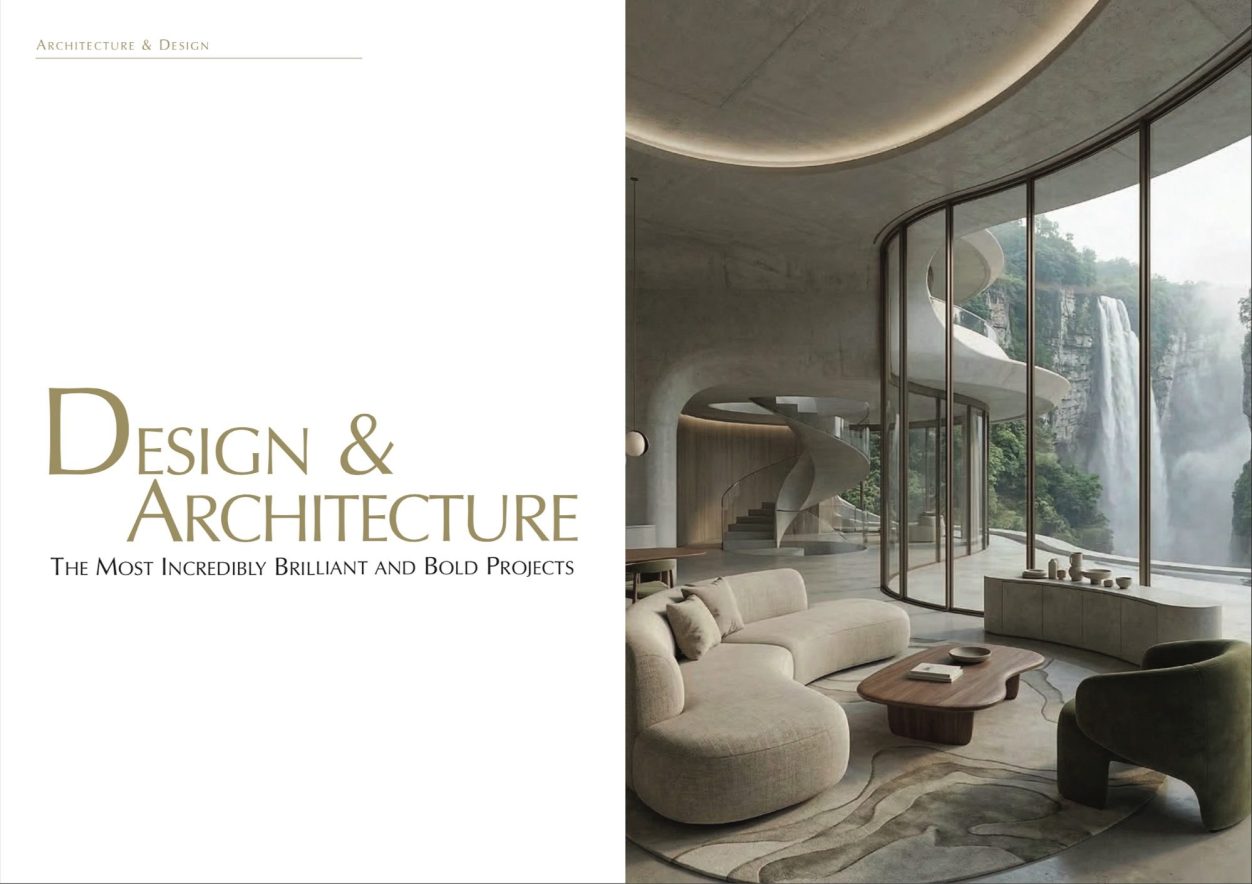
DESIGN & ARCHITECTURE
THE MOST INCREDIBLY BRILLANT AND BOLD PROJECTS
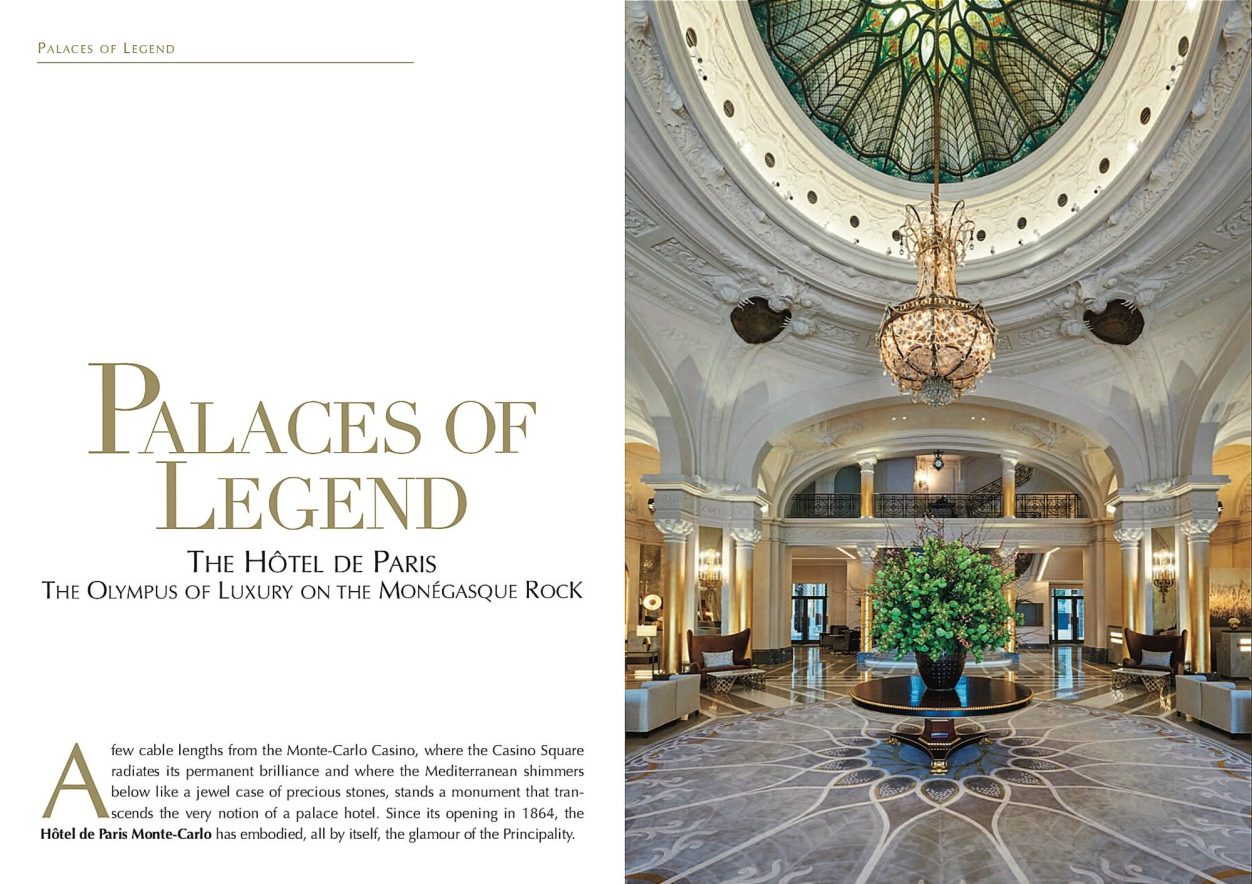
PALACES OF LEGEND
The Hotel de Paris
A few cable lengths from the Monte-Carlo Casino, where the Casino Square radiates its permanent brilliance and where the Mediterranean shimmers below like a jewel case of precious stones, stands a monument that transcends the very notion of a palace hotel. Since its opening in 1864, the Hôtel de Paris Monte-Carlo has embodied, all by itself, the glamour of the Principality. Here, the white limestone of its Belle Époque façade tells not merely the story of a hotel — it whispers that of a civilization of absolute luxury, forged upon a Rock that the entire world has come to envy.
A Legend Born of a Bold Wager It all begins in 1863, when François Blanc, a brilliant visionary and founder of the Monte-Carlo Société des Bains de Mer, lays the foundations of a dream. His motto, which still resonates today as a founding manifesto, is of striking clarity: "Here, we must give dreams, pleasures and beauty." From this bold wager — transforming into a world-class prestige destination a site where once only olive and lemon trees grew — an institution is born whose reputation will soon be without equal on the face of the globe.
Its Belle Époque façade continues to captivate, while the interiors have been carefully renovated to meet the demands of the most discerning travellers. From crowned heads to the great figures of this world, from Hollywood divas to the most powerful industrialists of each century, all have crossed this hallowed threshold. No great name in contemporary history seems a stranger to these gilded corridors. The bond between the Hôtel de Paris and the Grimaldi family is itself the stuff of legend. The hotel served as the venue for the reception dinner of the wedding of Prince Rainier III and Princess Grace, for their twentieth wedding anniversary, for the celebrations of the Prince's twenty-fifth anniversary of reign, as well as for countless birthdays and private family gatherings.
It is difficult to imagine a finer consecration for any hotel establishment. A Palace Reinvented for the 21st Century Between 2014 and 2018, the Casino Square district, Monaco's centre of gravity, underwent a complete transformation, giving birth to a new Monte-Carlo of which the Hôtel de Paris is the beating heart. This colossal renaissance, one of the most ambitious renovations ever undertaken in the world of hospitality, made it possible to preserve the soul and the genius of the place while propelling it into a sovereign modernity.
The establishment offers 206 rooms and suites, all recently renovated to the highest standards. Every space breathes excellence: noble materials, generous volumes, masterfully controlled lighting, technology perfectly concealed behind an elegance that never falters. Exclusivity here is a philosophy of life, not a marketing promise. Lighting, textures, amenities: everything in this place converges toward the unforgettable experience of a five-star hotel. The Patio des Joailliers — an ultra-exclusive setting housing the greatest fine jewellery houses — the American Bar, where signature cocktails are savoured against a backdrop of live jazz, and the Wellness Sky Club, with its heated outdoor rooftop pool, together compose an art de vivre of rare coherence.
Guests enjoy direct access to the Thermes Marins Monte-Carlo, a temple of well-being and health spanning over 6,500 square metres. An indoor pool, solarium, hammam, sauna, jacuzzi and state-of-the-art fitness centre form a sanctuary of rejuvenation that has few equals on the Riviera. The Louis XV – Alain Ducasse: Gastronomy Elevated to the Rank of Sacred Art On the ground floor of the palace, behind tall sculpted doors that seem to jealously guard a treasure, lies one of the most revered temples of world gastronomy.
The Louis XV – Alain Ducasse is to gastronomy what the Eiffel Tower is to Paris: a landmark, an unmissable address, an icon. Its story is one of a challenge met with breathtaking panache. Alain Ducasse opened the restaurant in May 1987, after Prince Rainier III of Monaco and the Société des Bains de Mer challenged him to earn three Michelin stars within four years, making it the first hotel restaurant to reach that level of distinction. Ducasse was barely thirty-three years old when the Louis XV became the first hotel restaurant to receive three stars in the Michelin Guide — and achieved this in just thirty-three months, a full fifteen months ahead of the set deadline. His celebrated vegetable menu "Jardins de Provence", launched in Monaco on 27 May 1987, has been one of the touchstones of French gastronomy for over thirty years. Since then, it is Emmanuel Pilon who brilliantly perpetuates the Ducassian philosophy, supported by pastry chef Sandro Micheli. The cuisine of naturalness enriches the Mediterranean repertoire of the Louis XV, whose chef, inspired by the recipes and produce of the Riviera, delivers a modern, light and vibrant interpretation. Only elite teams can produce cuisine such as that of the Louis XV — a cuisine that is considered, crafted, refined and symphonic, in which every musician commits to a perfect performance.
The restaurant's cellar holds some 400,000 bottles of wine, a viticultural and oenological treasure of breathtaking scope, guided by head sommelier Maxime Pastor whose expertise is worthy of the collection itself. The Louis XV welcomes its guests from Tuesday to Saturday in the evening, as well as on Friday and Saturday for lunch. A reservation must be planned several weeks, even several months in advance, so greatly does demand exceed availability on any given night. The Diamond Suite Prince Rainier III: A Villa in the Skies If one were to name the ultimate apotheosis of luxury hospitality in Europe, it would undoubtedly be this. A true "villa on the rooftop", the Diamond Suite Prince Rainier III is the largest suite at the Hôtel de Paris and one of the most spectacular in the known world. It was inaugurated on 29 January 2019 by H.S.H. Prince Albert II of Monaco and H.S.H. Princess Stéphanie.
The suite unfolds across approximately 830 square metres of refined spaces, conceived as a private residence offering an exclusive experience. Entirely open onto the Casino Square, it brings together the finest French and Italian decorative craftsmanship. Golden tones alternate with touches of more vivid colours, creating an atmosphere of luminous contrast that only the greatest interior designers know how to orchestrate. What makes this suite absolutely unique is its deeply intimate connection with the history of the Principality. The most precious elements are the light fixtures created from drawings and models by the hand of Prince Rainier III himself, making this space a truly one-of-a-kind place in the world. Works of art and photographs drawn directly from the late Prince's personal collection adorn every corner of the suite. To stay here is therefore to step into the private world of a sovereign, to reach out and touch legend.
The amenities are commensurate with the exceptional: two bedrooms — with the possibility of a third communicating room —, a study, an entrance dressing room with a cloakroom and a dressing room per bedroom, three sitting rooms, a living room, a dining room, a kitchen, a bathroom with bathtub, hammam shower and sauna, as well as a second bathroom with bathtub and hammam shower. Outside, a panoramic terrace of approximately 350 square metres spread across two levels offers a spectacular view over the Casino Square, the Mediterranean, Monaco, France and, on the horizon, Italy. The terrace itself is breathtaking, with a heated infinity pool, sun loungers, an outdoor dining table and a lounge area perfect for savouring a cocktail at sunset. The bar area in the main living room and the superb heated pool with a counter-current swimming system make the Prince Rainier III Suite the promise of an unforgettable journey. The personal service accompanying the suite's residents is equally extraordinary. A team of private Clefs d'Or concierges is at the guests' entire disposal. Chauffeurs, housekeepers, chefs, sommeliers and maîtres d'hôtel are all dedicated to making the experience absolutely unforgettable. Every guest is welcomed from the airport or heliport, with welcome gifts and personalised attentions. A bespoke treatment at the Thermes Marins in winter, a private tent at the Monte-Carlo Beach in summer, complete this offering of incomparable services. Lovers of haute gastronomy may be invited to Chef Alain Ducasse's private table, for a four-course dinner prepared by the chef of the Louis XV — a rare privilege that only the Diamond Suite can offer. The rate: The Diamond Suite Prince Rainier III is available upon request, at a price ranging from 35,000 to 45,000 euros per night depending on the season. An investment which, for those who know what they are purchasing, is beyond price: not a hotel room, but a living piece of Monaco's princely history, suspended above the Mediterranean, with the entire world at one's feet. The Aura of a Perpetual Myth Monte-Carlo Société des Bains de Mer today reinforces its status as the most starred resort in the world, with ten Michelin stars gathered across its establishments.
The Hôtel de Paris remains the backbone of this empire of refinement, the place where every detail is a declaration of intent and where every stay becomes a memory. Each year, during the Monaco Grand Prix, the fastest single-seaters in the world brush past its façade in a roar of engines. The hotel has watched the fever of the world pass by for more than one hundred and sixty years, impassive and magnificent, certain that it has nothing to prove to anyone. For the Hôtel de Paris Monte-Carlo is the benchmark palace, the one against which all others measure themselves, without ever quite equalling it.
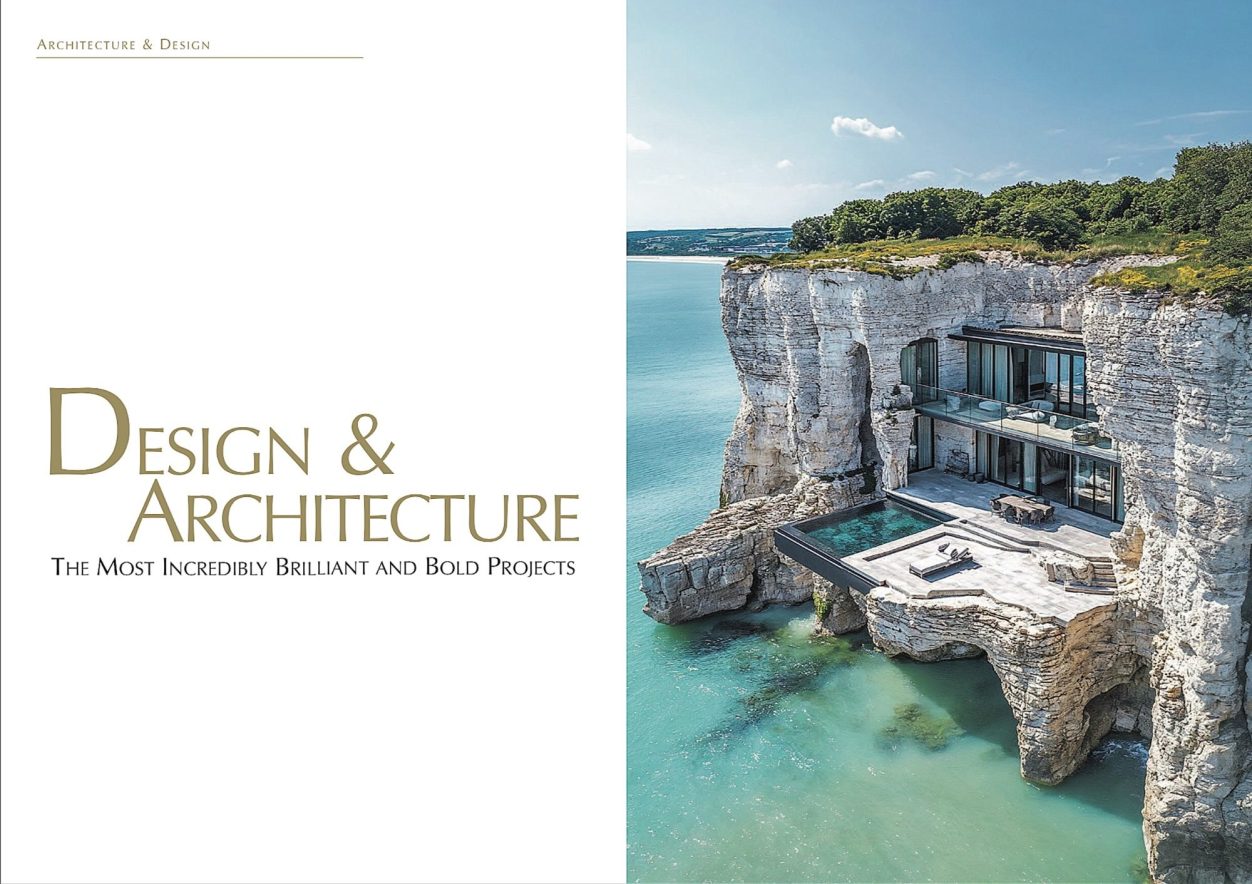
DESIGN & ARCHITECTURE
THE MOST INCREDIBLY BRILLANT AND BOLD PROJECTS
DESIGN & ARCHITECTURE
THE MOST INCREDIBLY BRILLANT AND BOLD PROJECTS
DESIGN & ARCHITECTURE
THE MOST INCREDIBLY BRILLANT AND BOLD PROJECTS
DESIGN & ARCHITECTURE
THE MOST INCREDIBLY BRILLANT AND BOLD PROJECTS
DESIGN & ARCHITECTURE
THE MOST INCREDIBLY BRILLANT AND BOLD PROJECTS

DESIGN & ARCHITECTURE
THE RITZ PARIS:
WHERE PLACE VENDÔME DEFINES THE ART OF LUXURY.
The Ritz Paris asserts itself more than ever as one of the ultimate stages of global luxury, a condensed showcase of French refinement and worldly legends, right in the heart of Place Vendôme.
Behind its classic façade, this palace blends history, exceptional architecture, masterful craftsmanship, and an elite clientele, creating a unique performance of the French art of living. The architecture of the Ritz Paris follows the pure tradition of the grand hôtels particuliers of Place Vendôme, echoing its majestic Louis XIV façade, punctuated by tall windows, understated pilasters, and a harmonious cornice that embraces the square’s perspective. Inside, the palace cultivates a resolutely classical style, inspired by Louis XV and Louis XVI décor, where patinated woodwork, finely carved moldings, veined marble, gilded accents, and crystal chandeliers form a coherent and refined decorative vocabulary.
The enfilade salons, opening onto the square or inner gardens, are conceived as true living stages, adorned with thick carpets, monumental fireplaces, and intricately framed mirrors that amplify the light and create a sense of theatrical depth. In the rooms and suites, the same spirit of “subtle luxury” prevails, with cream, gold, or pastel tones, sumptuous silks, 18th-century-inspired furniture, and fully concealed technology, preserving the illusion of a timeless private apartment. A Historic Jewel in Place Vendôme Overlooking Place Vendôme, perhaps one of Europe’s most beautiful urban compositions, the Ritz Paris occupies the former Hôtel de Gramont, a townhouse built at the beginning of the 18th century. Behind its classical façade, punctuated by pilasters, tall windows, and arcades opening onto boutiques and salons, the palace unfolds a refined scenography where marble, woodwork, gilding, and masterful perspectives compose a cinematic setting.
Located at 15 Place Vendôme, just steps from Rue de la Paix, Place de la Concorde, and the Tuileries Gardens, the hotel enjoys a privileged position at the crossroads of haute jewelry, haute couture, and the institutions of the French Republic. In this environment, where jewellers’ houses, luxury boutiques, and grand ministries share the façades, the Ritz embodies an address whispered about more than it is publicly displayed. The Visionaries and Great History The Ritz Paris was born in 1898 from the dream of a visionary Swiss, César Ritz, already hailed as the “king of hoteliers and hotelier to kings,” in partnership with the renowned chef Auguste Escoffier. Together, they acquired the former Hôtel de Gramont and entrusted its transformation to architect Charles Mewès, who designed a revolutionary hotel for its time, featuring private bathrooms, electricity, and telephones in the rooms.
From the moment it opened, the Ritz established a new language of luxury, combining unprecedented technical comfort with absolute discretion, soon becoming the benchmark for the great European palaces. The hotel quickly became a privileged stage of history: a headquarters for occupiers during World War II, a refuge for royalty, diplomats, and writers, it weathered crises and renaissances without ever losing its aura as the ultimate address. Owners and Transformations After César Ritz, the property remained in the Ritz family until the 1970s, notably under his son Charles Ritz, a figure of post-war Parisian elegance. Following his death, his widow Monique Ritz ultimately sold the palace in 1979 to Egyptian businessman Mohamed Al-Fayed, who turned it into a flagship of his empire. Al-Fayed undertook massive investments, estimated at around $50 million, to restore and modernize the Ritz while preserving its Belle Époque style, adding a swimming pool, spa, and contemporary amenities.
Closed in 2012 for extensive renovations and reopened in 2016, the palace is still owned by the heirs of Mohamed Al-Fayed, who continue to uphold the vision of a timeless hotel adapted to the demands of the 21st century. Interior Architecture and Atmosphere The Ritz cultivates sumptuous classicism: enfilade salons bathed in light, monumental staircases, marble fireplaces, thick carpets, and glittering chandeliers create a décor that is at once theatrical and intimate. The rooms and suites, many overlooking Place Vendôme or the gardens, reinterpret a Louis XV and Louis XVI vocabulary, where silks, moldings, gilding, and period furniture converse seamlessly with fully concealed modern technology. In the basement, a spa featuring a neoclassical-style swimming pool, treatment rooms, and relaxation areas extends the idea of a secluded sanctuary, almost timeless. In both public spaces and suites, the hotel draws extensively on Belle Époque references, haute couture, and French decorative arts, creating an aesthetic continuity that reassures a loyal clientele.
Legendary Suites and Stratospheric Prices With its signature suites, the Ritz Paris ranks at the pinnacle of the global ultra-luxury accommodation hierarchy. Among them, the Coco Chanel Suite – a sprawling apartment of approximately 155 m² – served as the couturière’s residence for over three decades, decorated to her tastes with Coromandel lacquers, Chinese furniture, large baroque mirrors, and generous sofas. The prestigious suites, including the iconic Imperial Suite and the grand suites overlooking Place Vendôme, command dizzying rates of up to around €40,000 per night for the most spectacular configurations, depending on season and level of personalization. These suites, often reserved by royal families, billionaires, and global stars, include dedicated butlers, enhanced security, private dining rooms, reception salons, and sometimes even exclusive wellness areas. A Clientele of Stars and Royalty For more than a century, the Ritz Paris has attracted an unbroken procession of sovereigns, aristocrats, industrialists, and cultural icons.
The hotel is intimately associated with Coco Chanel, who lived here as if at home, but also with Ernest Hemingway, whose name now graces the famous Bar Hemingway, a meeting place for writers, filmmakers, and visiting actors in Paris. The address has also welcomed members of European and Middle Eastern royal families, Hollywood icons, and fashion figures, making the Ritz lobby a discreet yet privileged observatory of the international elite. The tragic night of Princess Diana and Dodi Al-Fayed, preceded by a dinner at the Ritz, indelibly inscribed the hotel in the modern collective imagination. Gastronomy and the French Art of Living At the Ritz, gastronomy is not a mere complement: it extends the original vision of César Ritz and Auguste Escoffier, who aimed to make the hotel a temple of taste. From fine dining to more intimate salons, the palace’s tables uphold a certain French classicism while embracing contemporary inspirations, staged with silverware, porcelain, and choreographed service as ritual. The bars, including the legendary Bar Hemingway, cultivate the art of exceptional cocktails, frequented by international regulars, connoisseurs, and passing travelers attuned to this blend of nostalgia and sophistication.
Altogether, the experience is holistic, where every detail – from flower arrangements to the scents in the corridors – is designed to embody the French art of living at its pinnacle. A Symbol of Global Luxury More than just a hotel, the Ritz Paris has become a benchmark—a word even—used to describe the utmost in refinement and exclusivity. In the collective imagination, “going to the Ritz” means entering a parallel, codified world, where time seems suspended and where the concept of service borders on an obsession with perfection.
On an international scale, the palace remains a symbol of Parisian prestige, on the same level as the Eiffel Tower or the Opéra Garnier, yet reserved for a select circle of “happy few” able to cross its threshold as insiders. The Ritz Paris thus represents not only an address but a culmination: that of total, silent, almost secret luxury, bathed in the mineral light of Paris and Place Vendôme.

DESIGN & ARCHITECTURE
THE IMPERIAL SPLENDOR PERSONIFIED: THE PETERHOF PALACE, A MASTERPIECE OF ARCHITECTURE AND GARDENS...

DESIGN & ARCHITECTURE
THE BREAKERS – NEWPORT: RICHARD MORRIS HUNT THE ARCHITECTURAL PINNACLE OF AMERICAN GENIUS...

DESIGN & ARCHITECTURE
JULIA MORGAN'S ARCHITECTURAL GENIUS: HEARST CASTLE,
JEWEL OF THE CALIFORNIA COAST...

DESIGN & ARCHITECTURE
IN FRANCE, THE CHÂTEAU DE VAUX-LE-VICOMTE: JOURNEY TO THE HEART OF AN ARCHITECTURAL AND SENSORY MASTERPIECE...
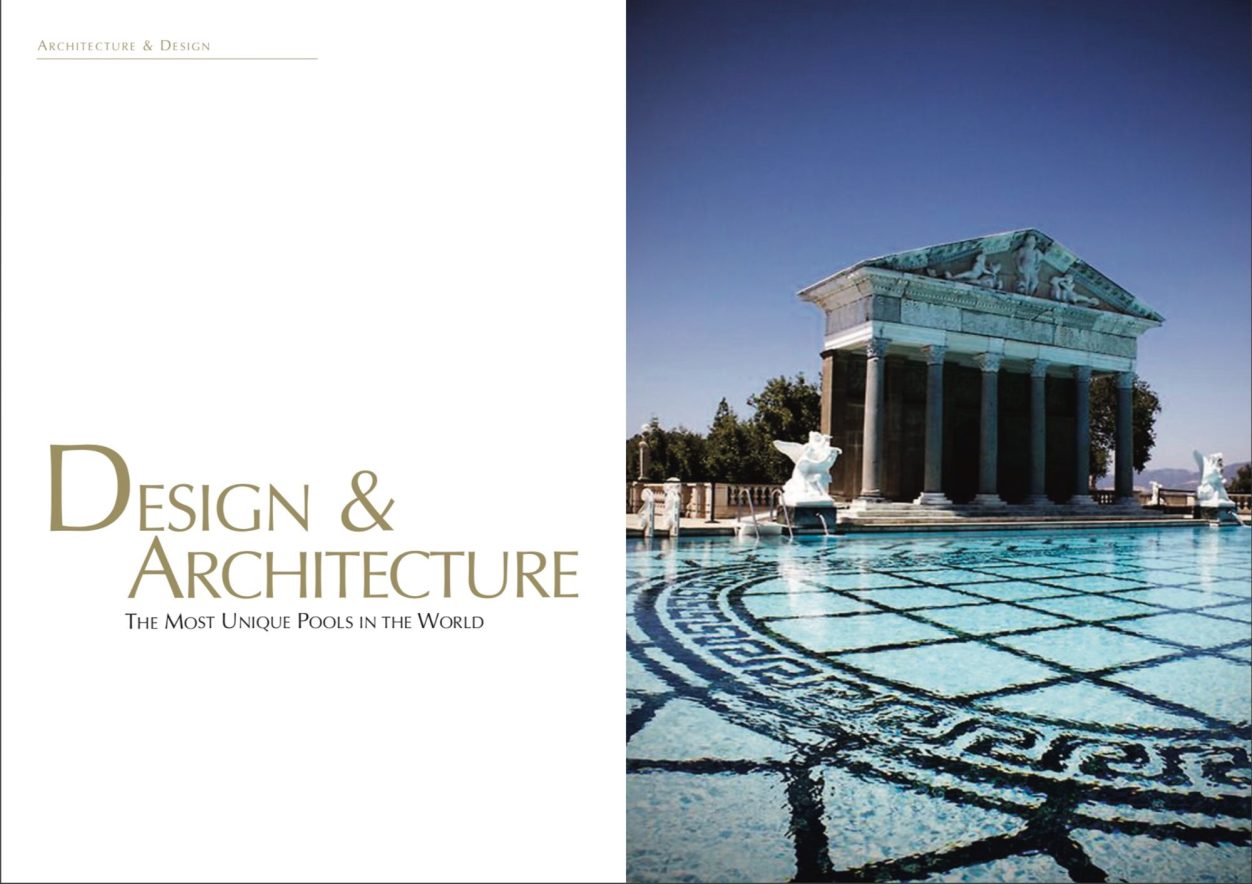
DESIGN & ARCHITECTURE
THE MOST UNIQUE POOLS IN THE WORLD…

DESIGN & ARCHITECTURE
THE MOST INCREDIBLY BRILLIANT AND DARING PROJECTS…
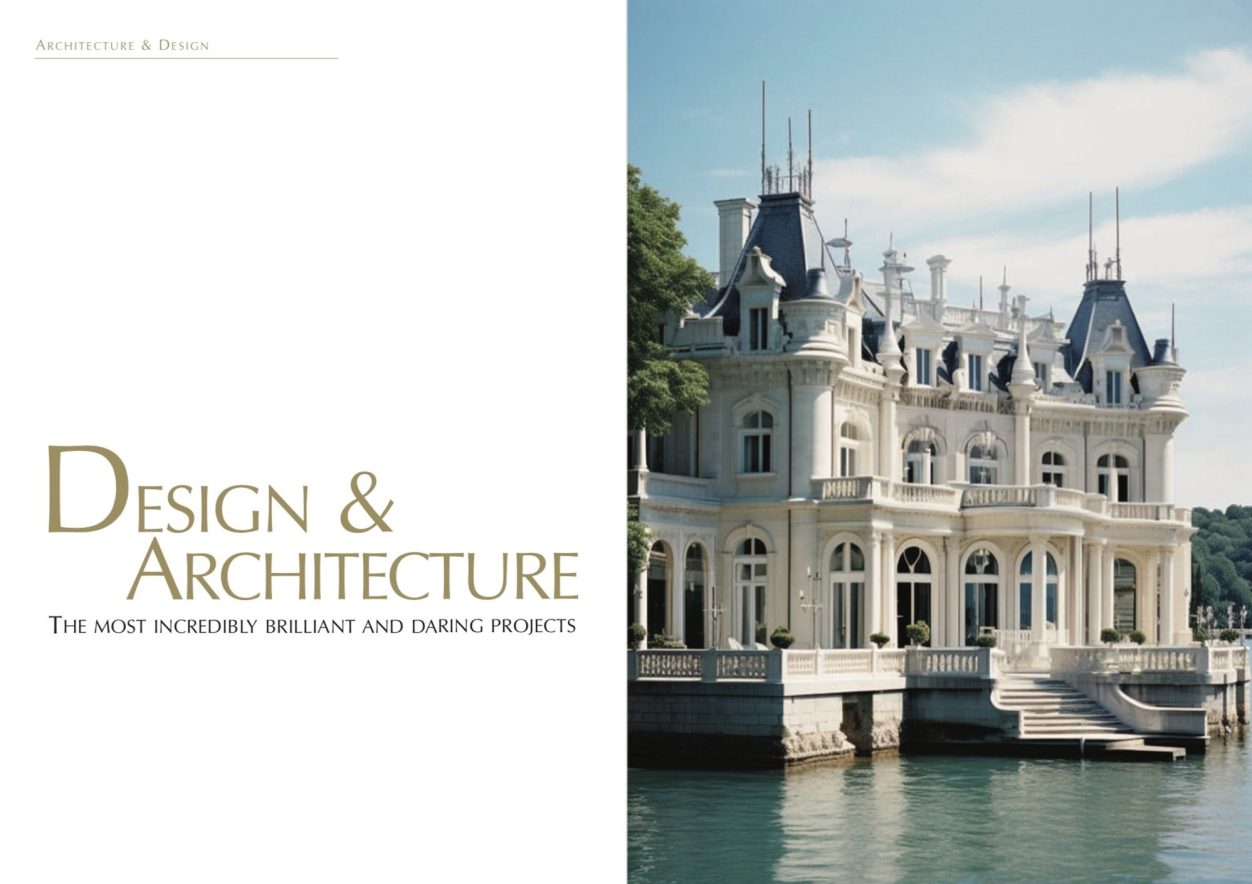
DESIGN & ARCHITECTURE
THE MOST INCREDIBLY BRILLIANT AND DARING PROJECTS…
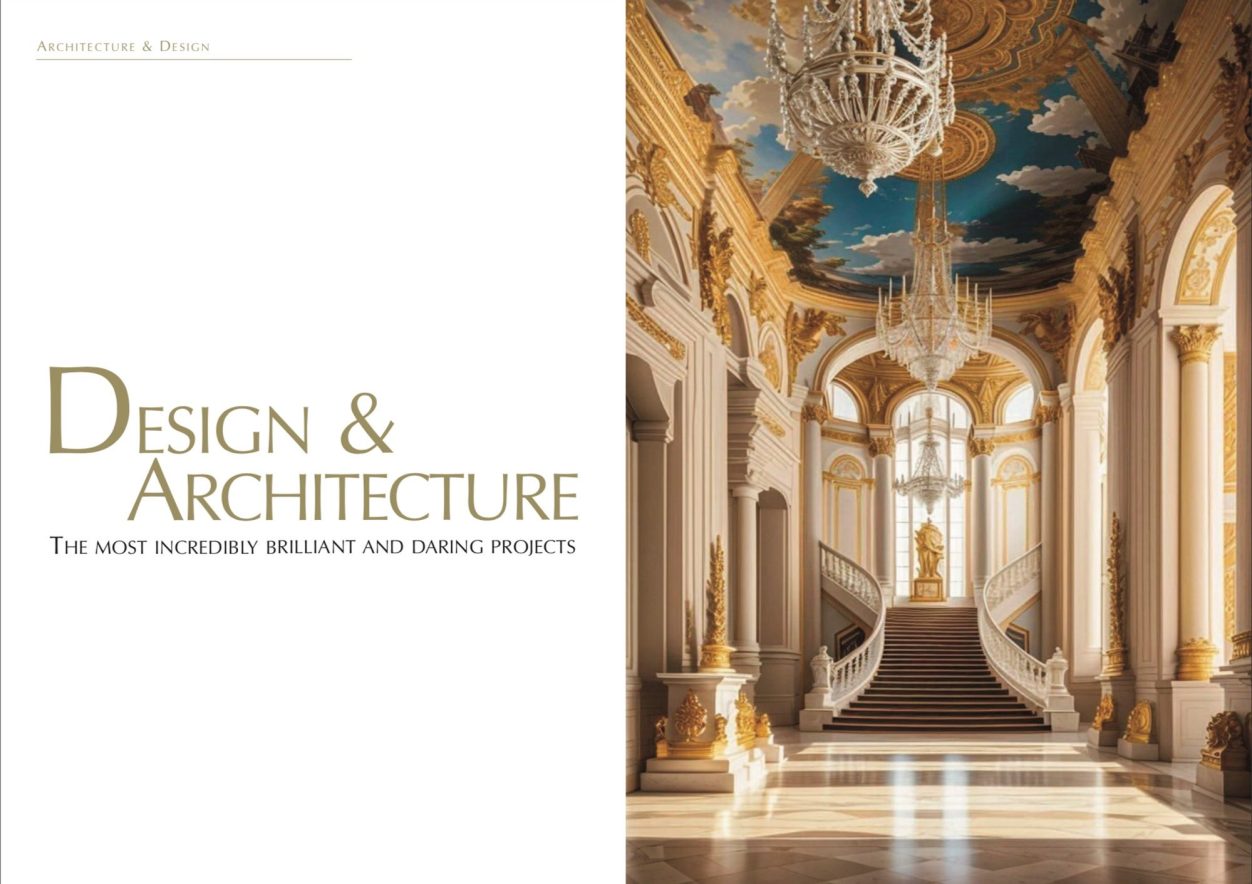
DESIGN & ARCHITECTURE
THE MOST INCREDIBLY BRILLIANT AND DARING PROJECTS…
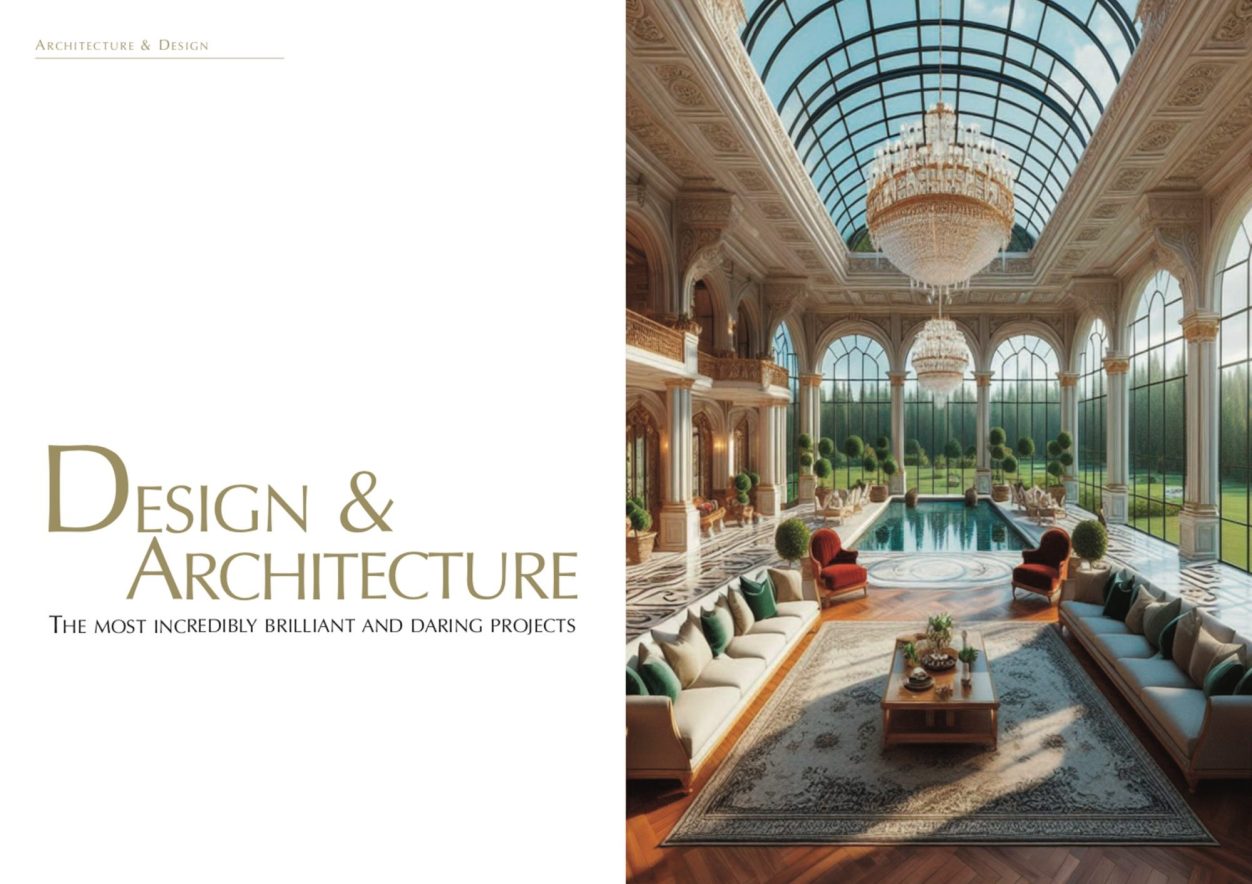
DESIGN & ARCHITECTURE
THE MOST INCREDIBLY BRILLIANT AND DARING PROJECTS…
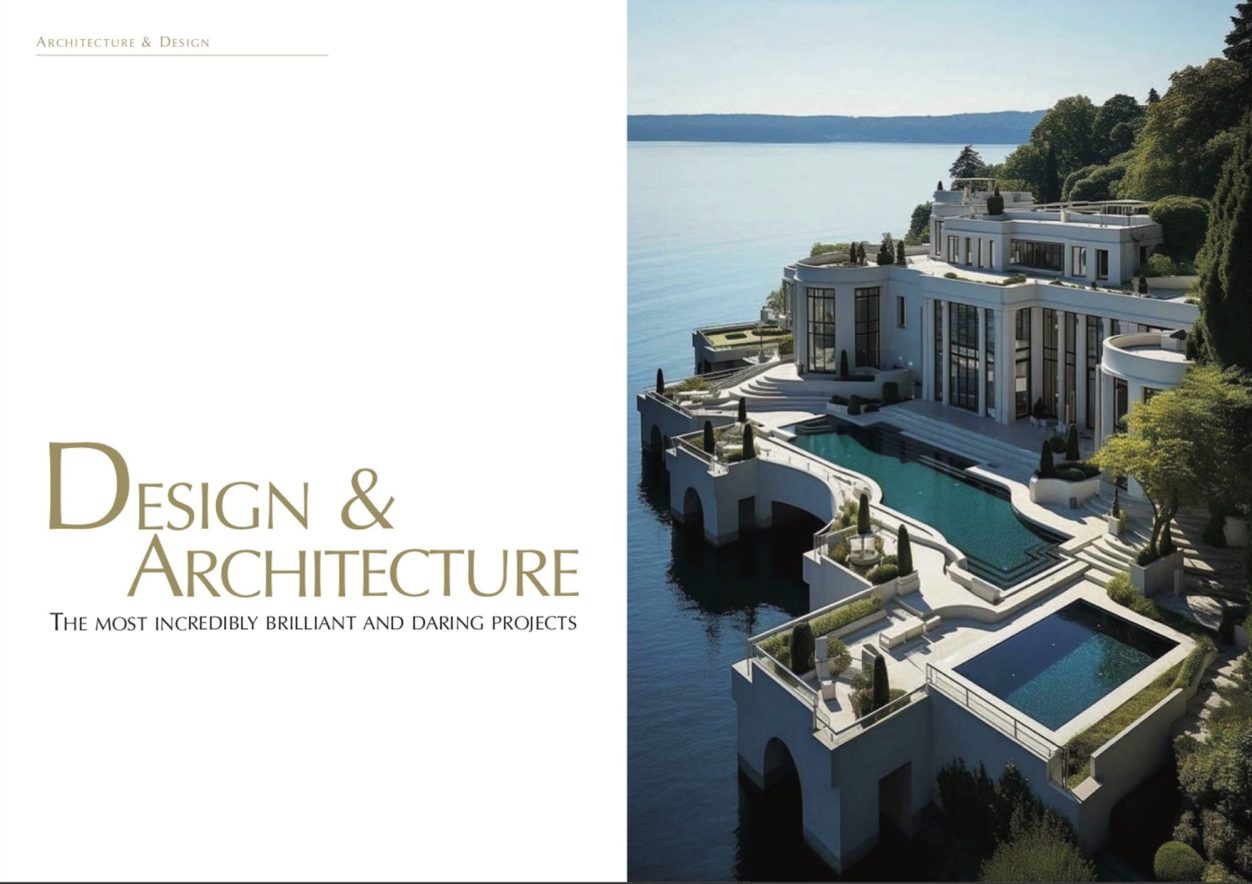
DESIGN & ARCHITECTURE
THE MOST INCREDIBLY BRILLIANT AND DARING PROJECTS…
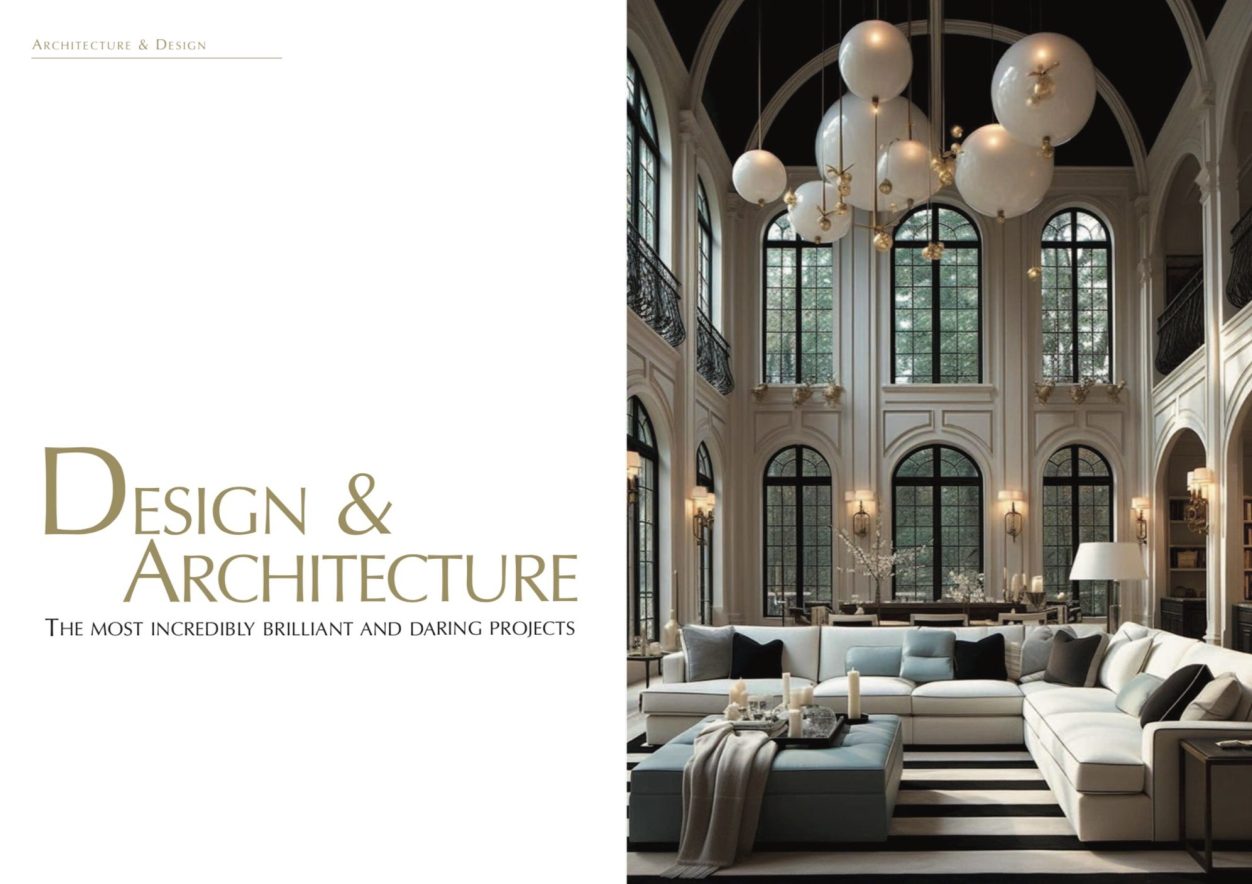
DESIGN & ARCHITECTURE
THE MOST INCREDIBLY BRILLIANT AND DARING PROJECTS…
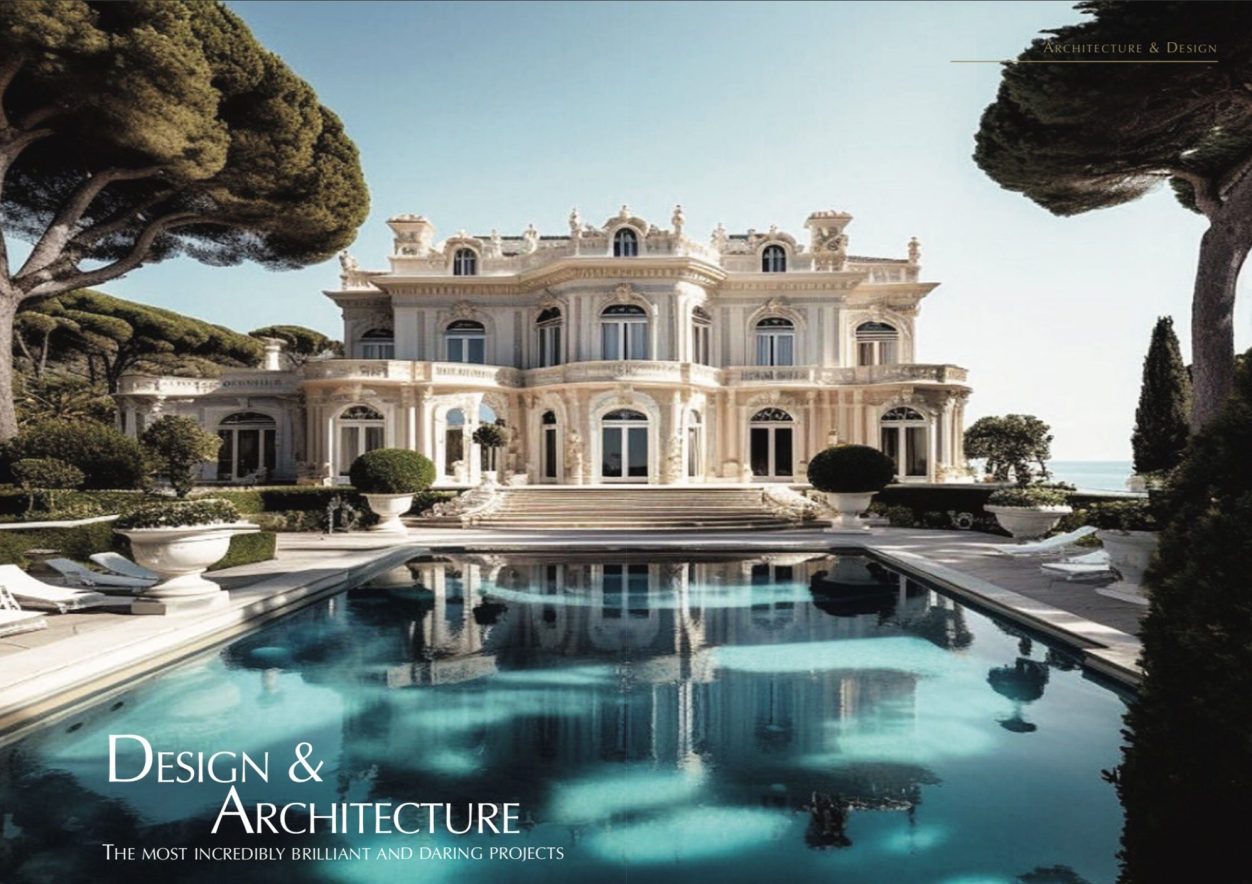
DESIGN & ARCHITECTURE
THE MOST INCREDIBLY BRILLIANT
AND DARING PROJECTS…
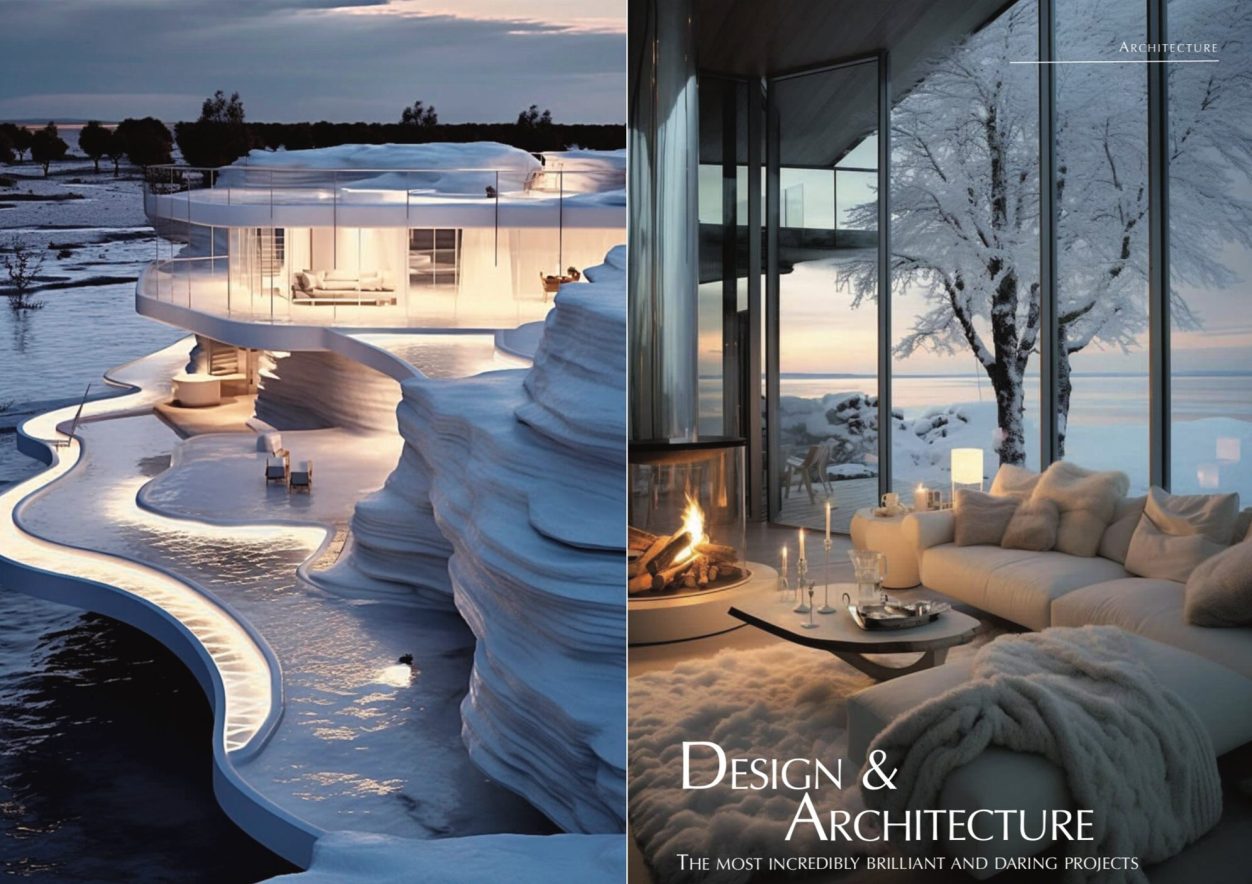
DESIGN & ARCHITECTURE
THE MOST INCREDIBLY BRILLIANT
AND DARING PROJECTS…
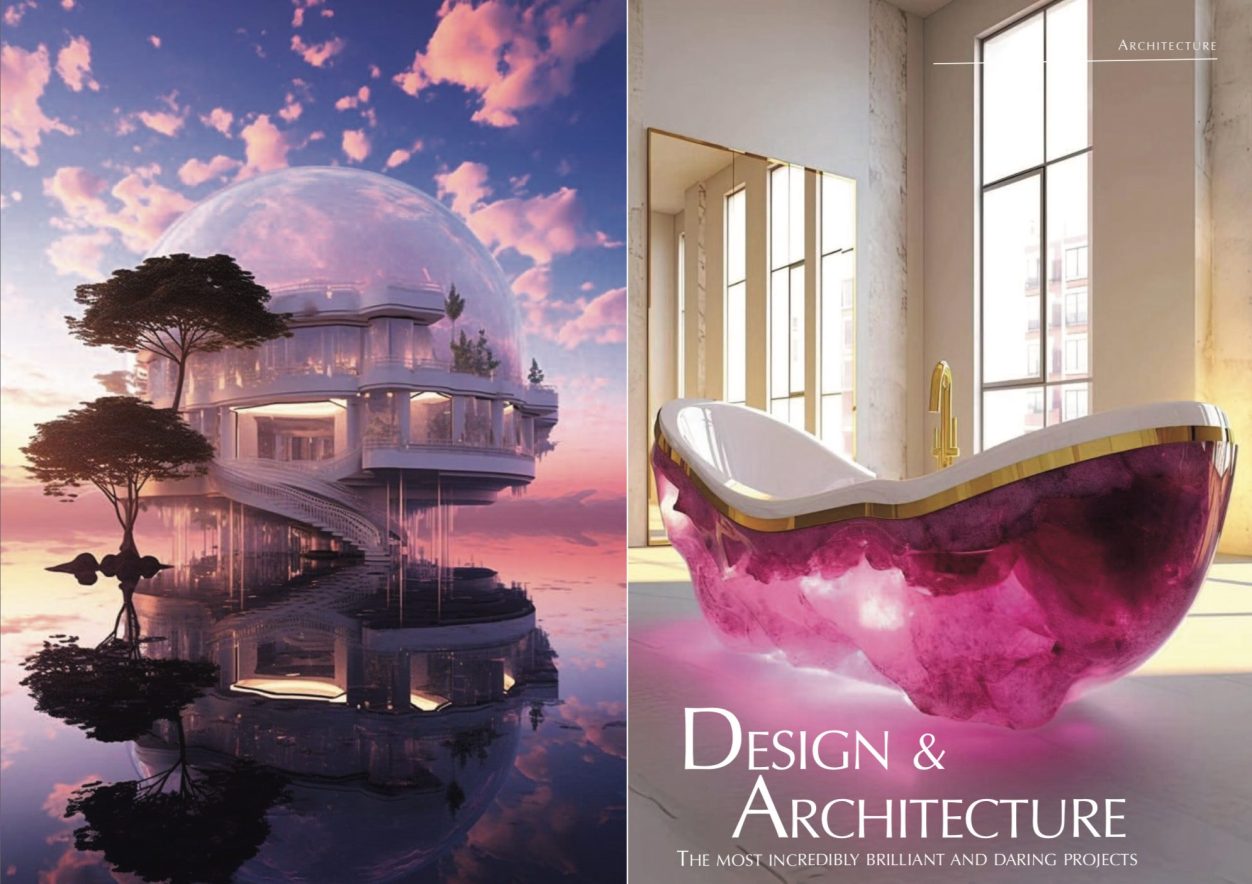
DESIGN & ARCHITECTURE
THE MOST INCREDIBLY BRILLIANT
AND DARING PROJECTS…
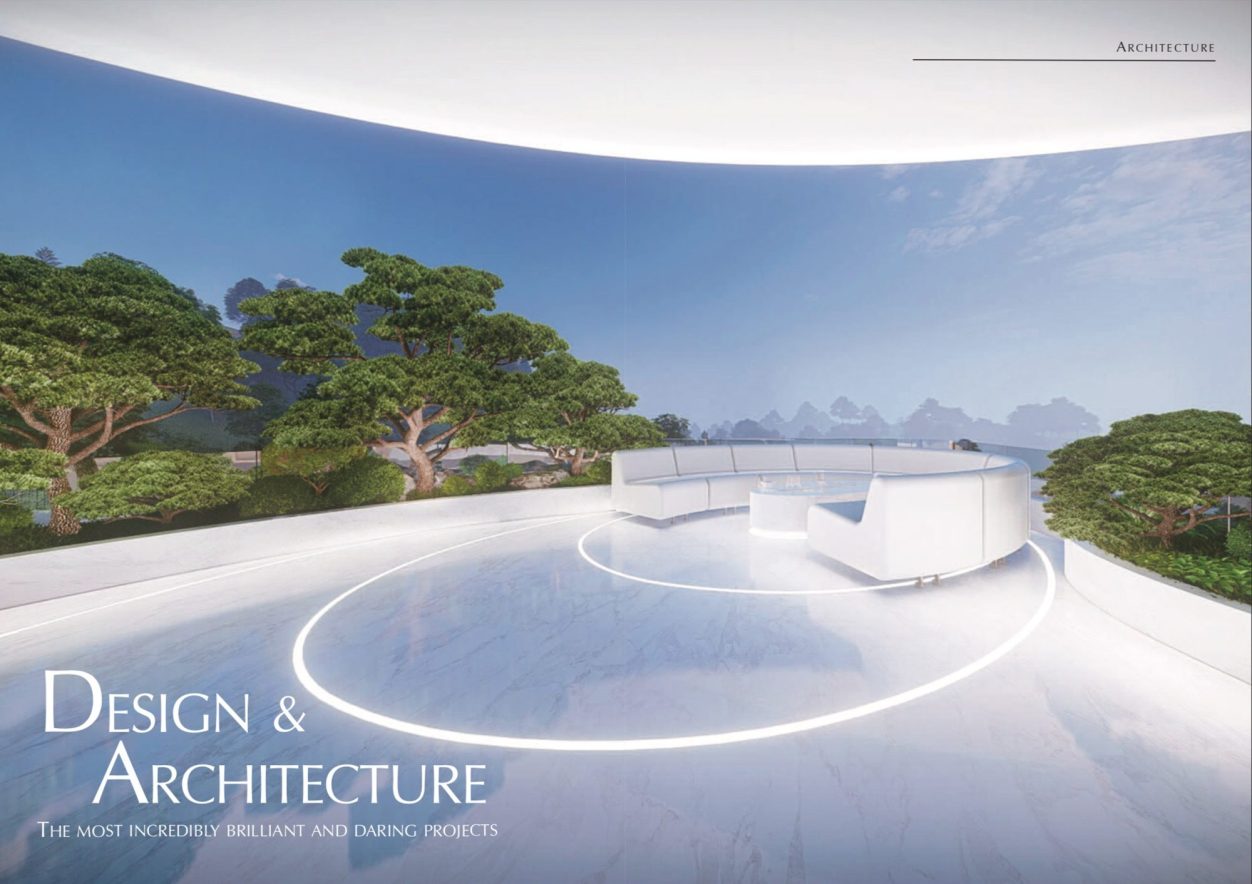
DESIGN & ARCHITECTURE
THE MOST INCREDIBLY BRILLIANT
AND DARING PROJECTS…
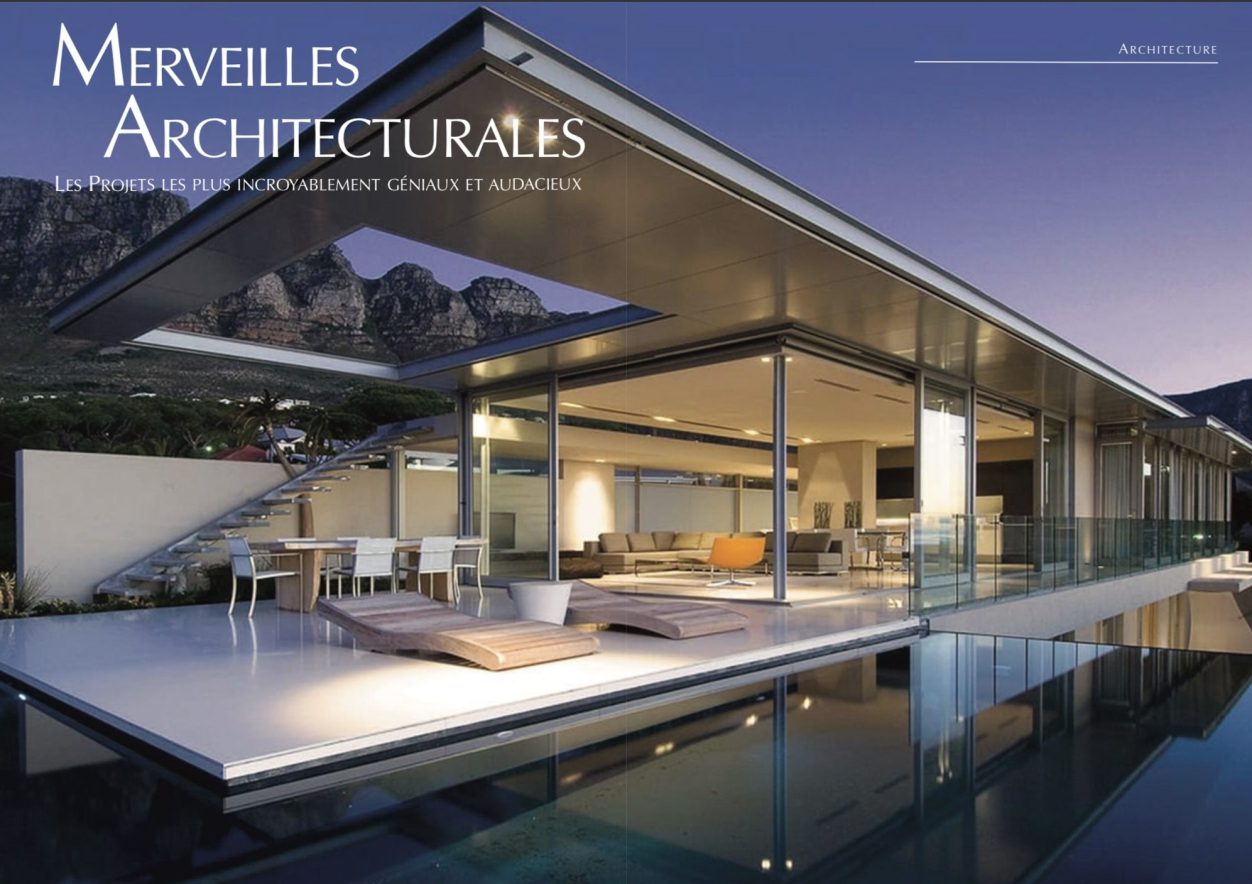
ARCHITECTURAL WONDERS
The most incredibly brillant and daring projects
Residential architecture is a fertile ground for creative expression, allowing architects to push the boundaries of imagination and design incredibly daring yet sublime houses. Discover residential architectural projects that defy conventions, push the limits of design, and awe with their originality and beauty…
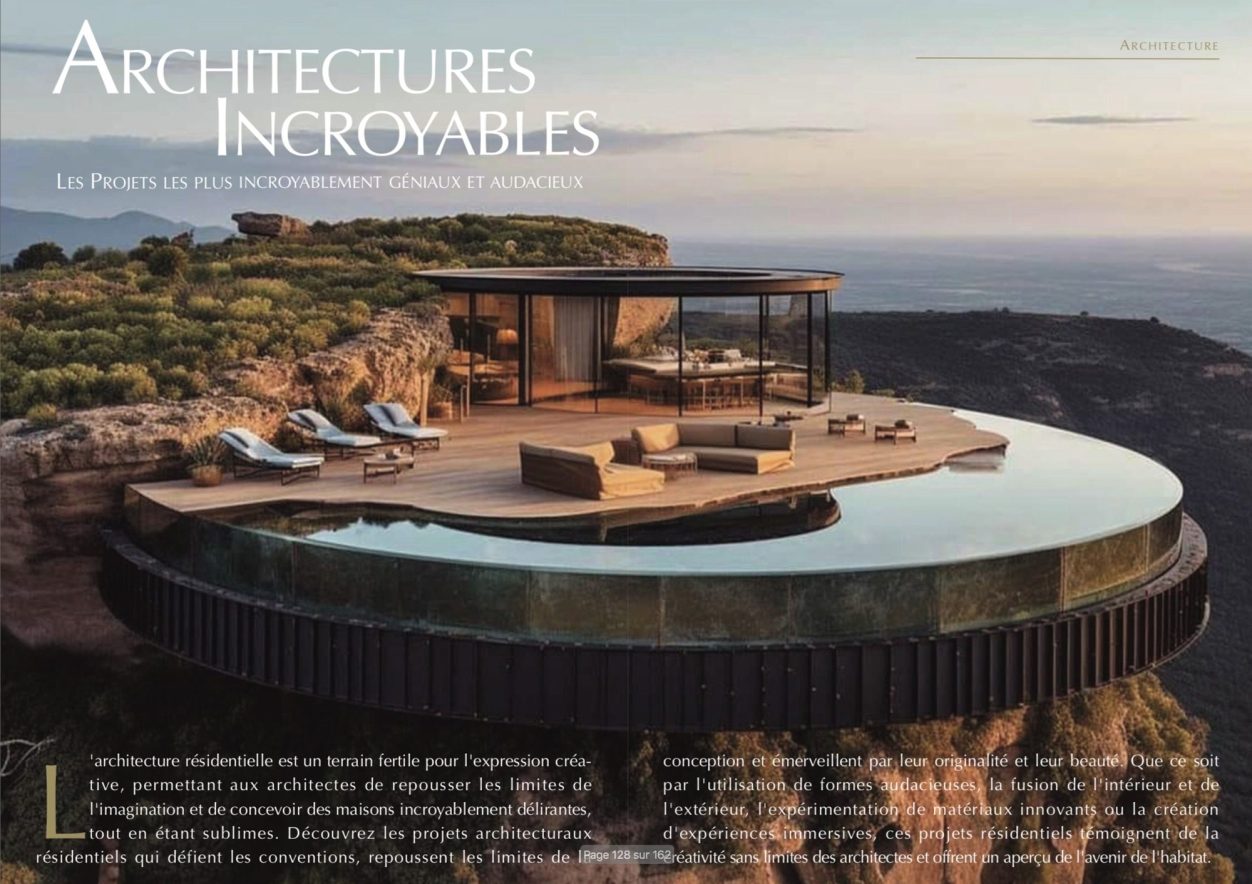
AMAZING ARCHITECTURES
The most incredibly brillant and daring projects
Residential architecture is a fertile ground for creative expression, allowing architects to push the boundaries of imagination and design incredibly daring yet sublime houses. Discover residential architectural projects that defy conventions, push the limits of design, and awe with their originality and beauty…
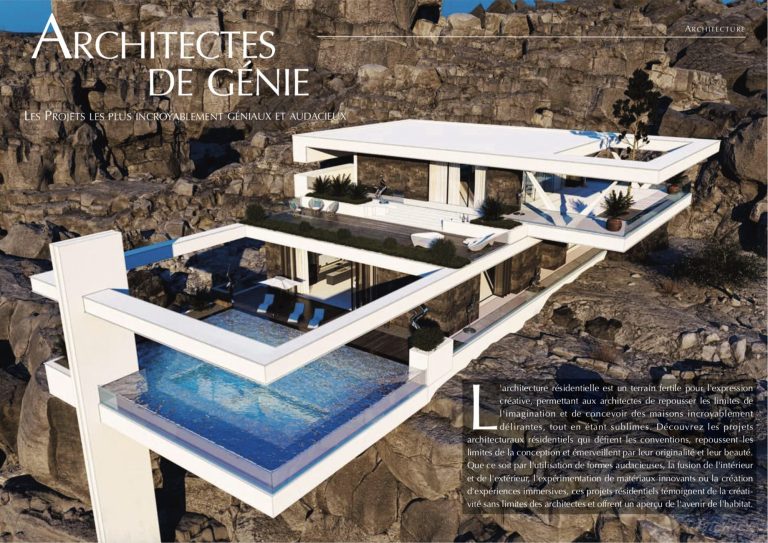
ARCHITECTS OF GENIUS
The most incredibly brilliant and daring projects…
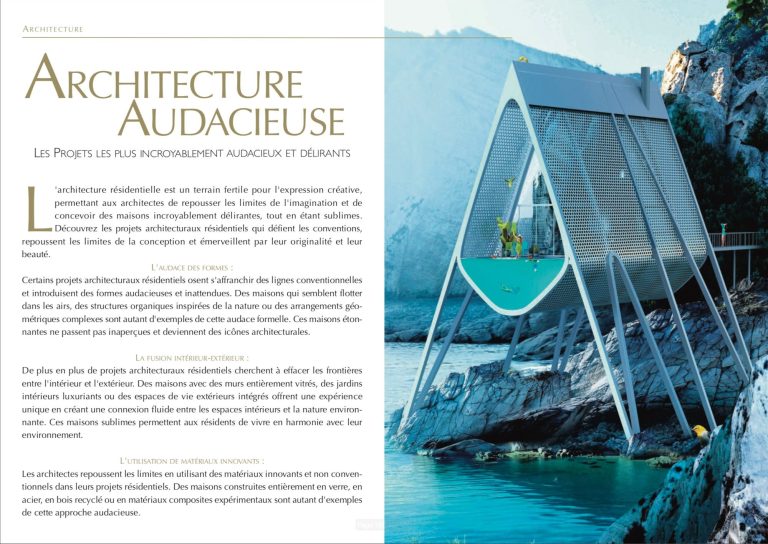
ARCHITECTURE AUDACIEUSE
LES PROJETS LES PLUS INCROYABLEMENT AUDACIEUX ET DÉLIRANTS
Dans un univers saturé de marques de célébrités, Angelina Jolie se démarque brillamment. Plus qu'une simple étiquette, elle repense l'industrie de la mode avec audace. Son dernier projet, "Atelier Jolie", incarne sa vision novatrice et son engagement envers la responsabilité sociale…
ARCHITECTURE BOLD
THE MOST INCREDIBLY AUDACIOUS AND CRAZY PROJECTS
Residential architecture provides fertile ground for creative expression, allo- wing architects to push the boundaries of imagination and design incredibly wild and daring homes that are also sublime. In this article, we will explore residential architectural projects that defy conventions, push the limits of design, and captivate with their originality and beauty…